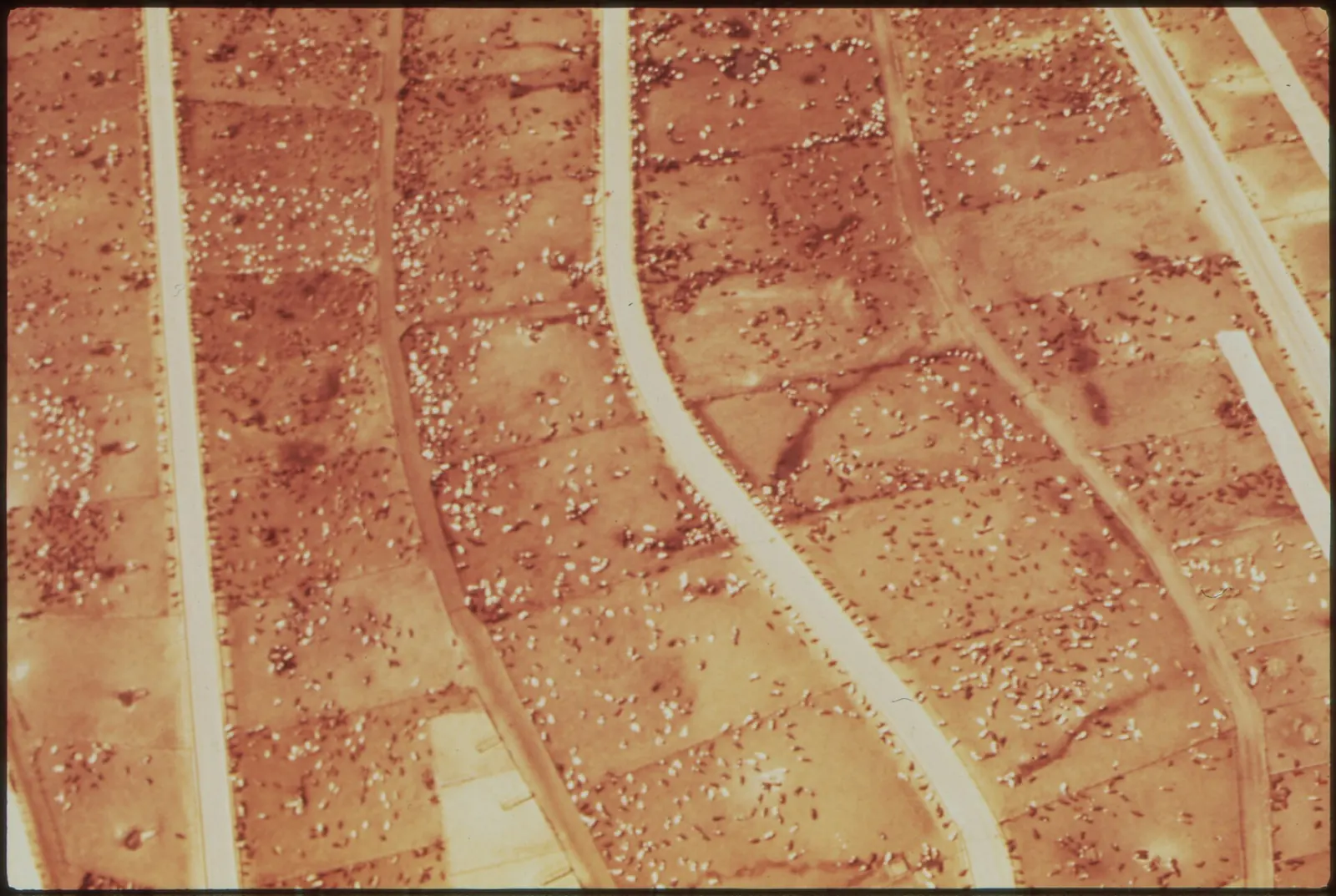
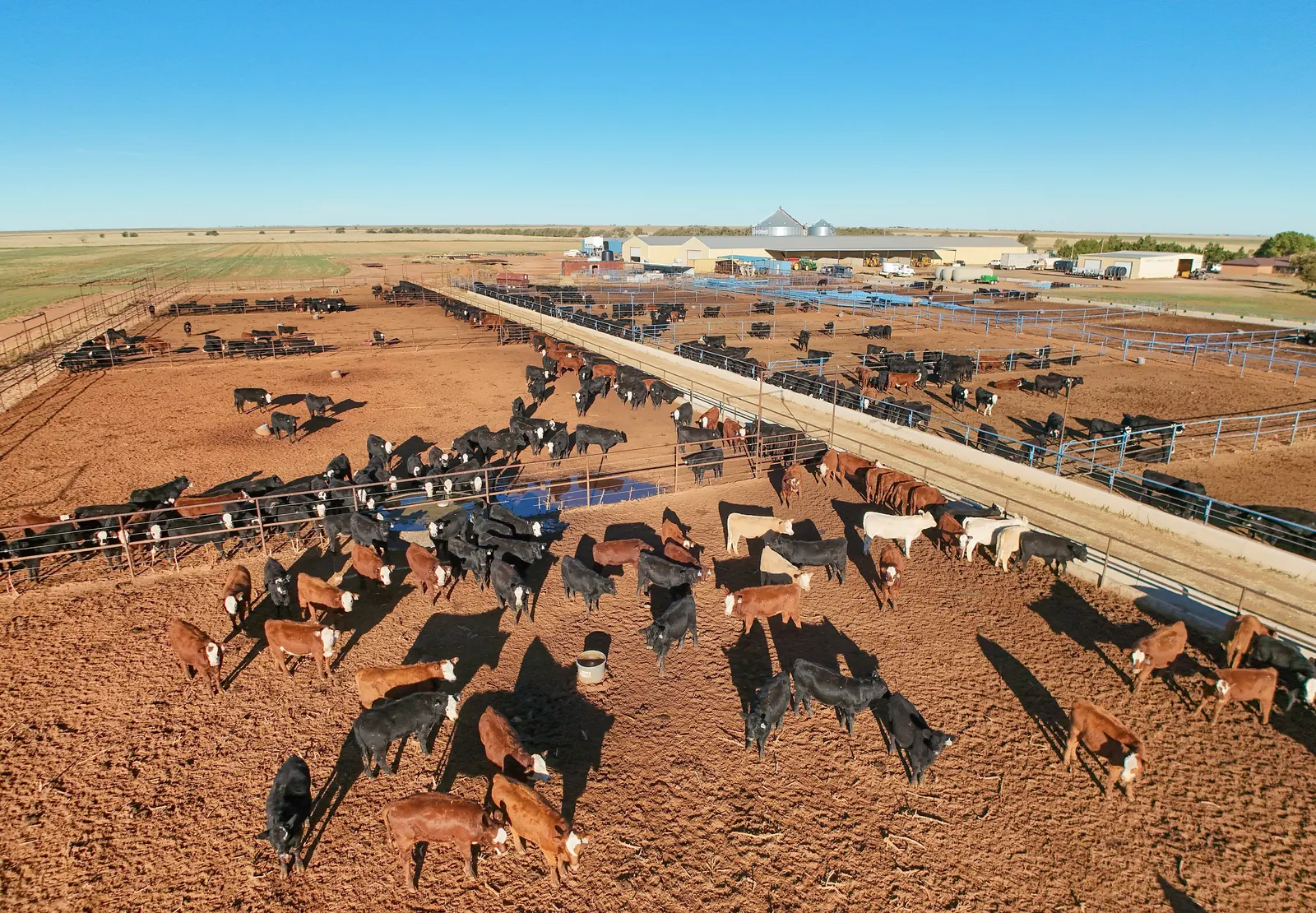
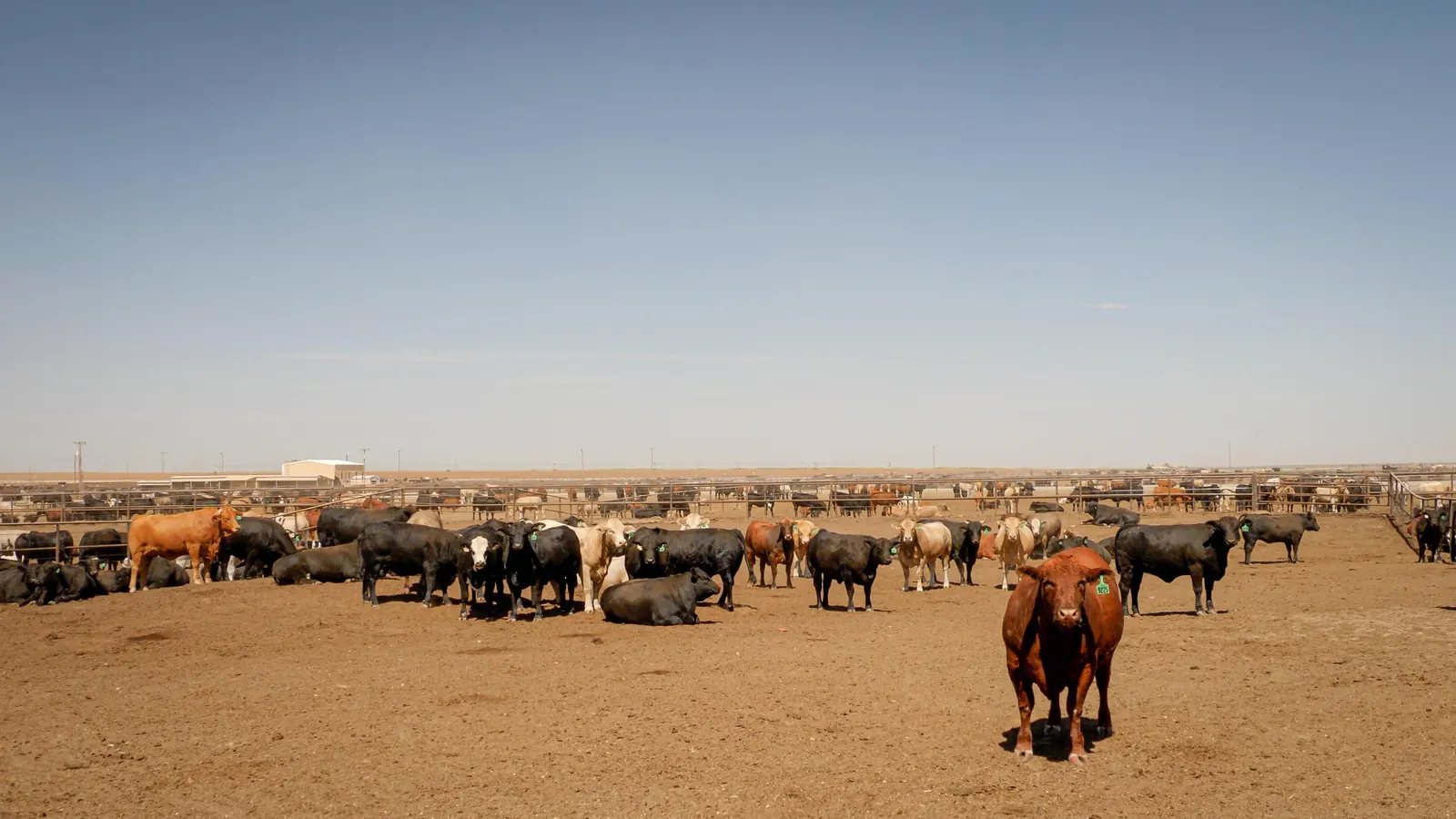
Cattle feedlot from the air, photographed by Gene Daniels for the EPA Documerica project in May 1972. Photo: Gene Daniels, U.S. EPA Documerica / National Archives · Public domain (U.S. government work) · source
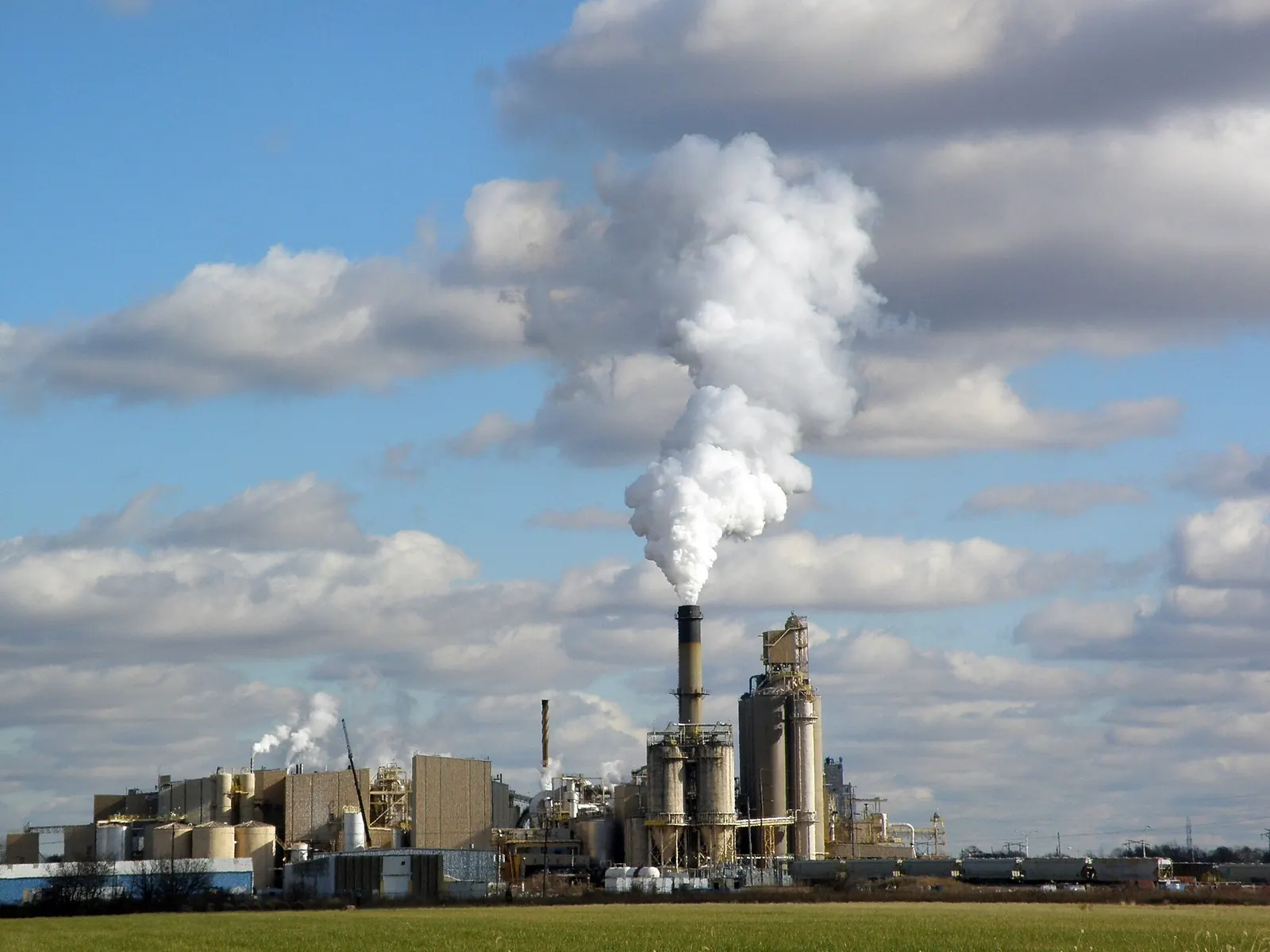
This is what industrial farming and big food look like. The photos below are real and credited, taken at oilseed crushing plants, feedlots, egg and pig barns, snack factories and farm fields. Each caption states only what its photo shows. A few places don’t allow cameras, so they’re shown as photorealistic illustrations marked AI-generated. Where a claim needs evidence, we link the guide that has it.
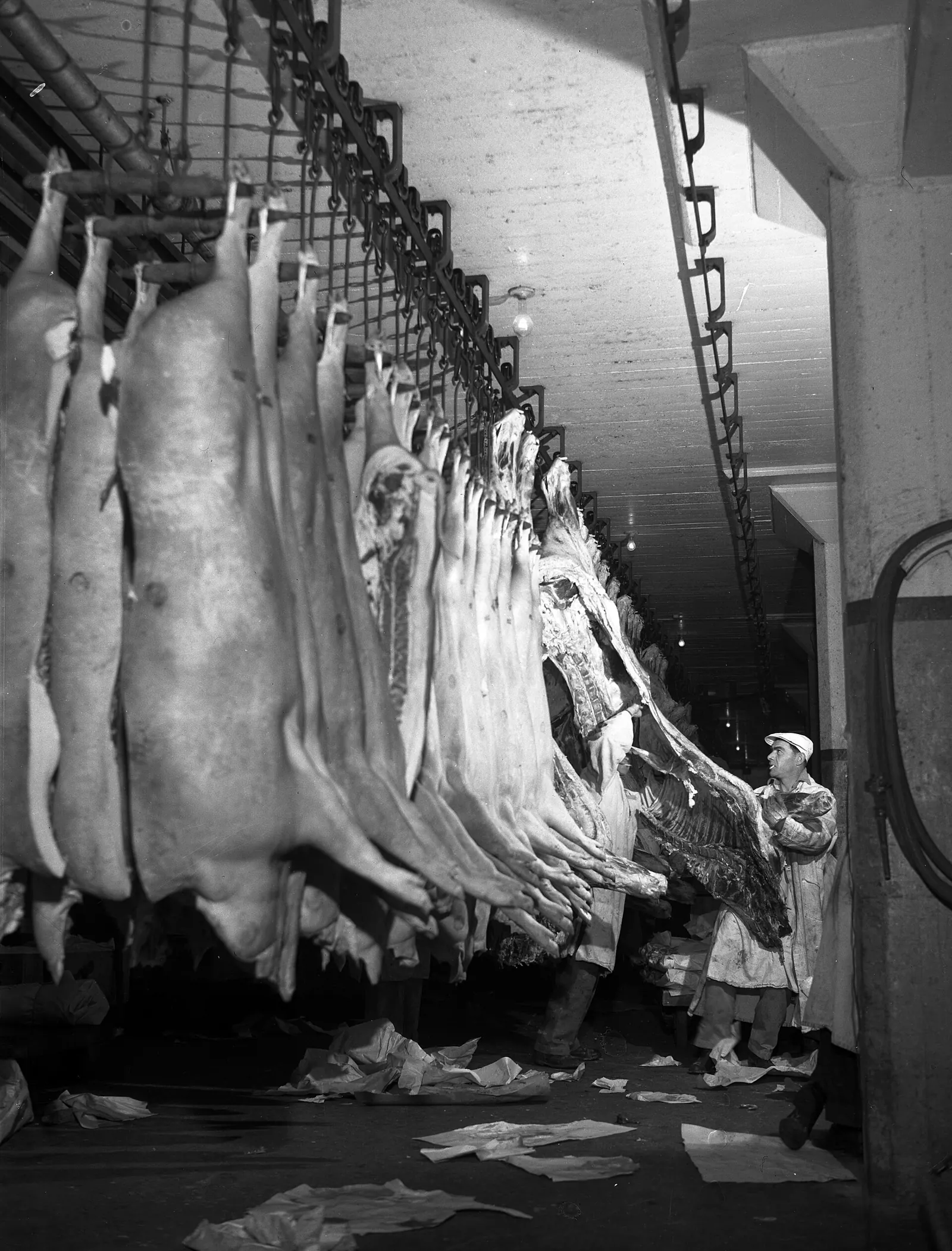
Heads up: some photos show confined animals and meat processing, including one of hanging pig carcasses. They’re documentary, not gory, but they are stark.
The photo above is an aerial view of cattle on a feedlot, taken for the EPA’s Documerica project in 1972. The EPA calls this kind of place an animal feeding operation: animals are confined and fed for 45 days or more a year, on ground where no crops or forage grow. The industry has grown since then.
How canola and seed oil is made
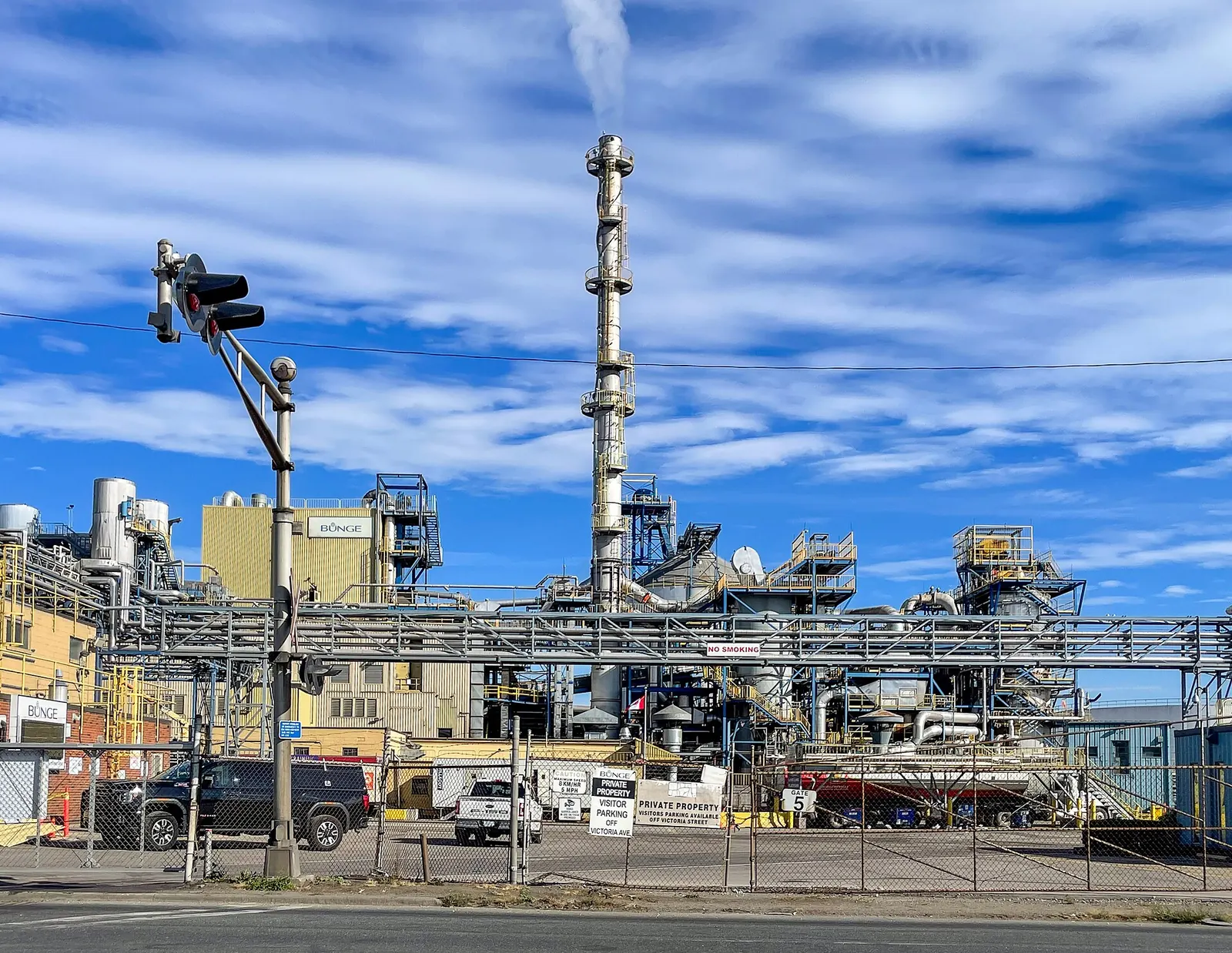
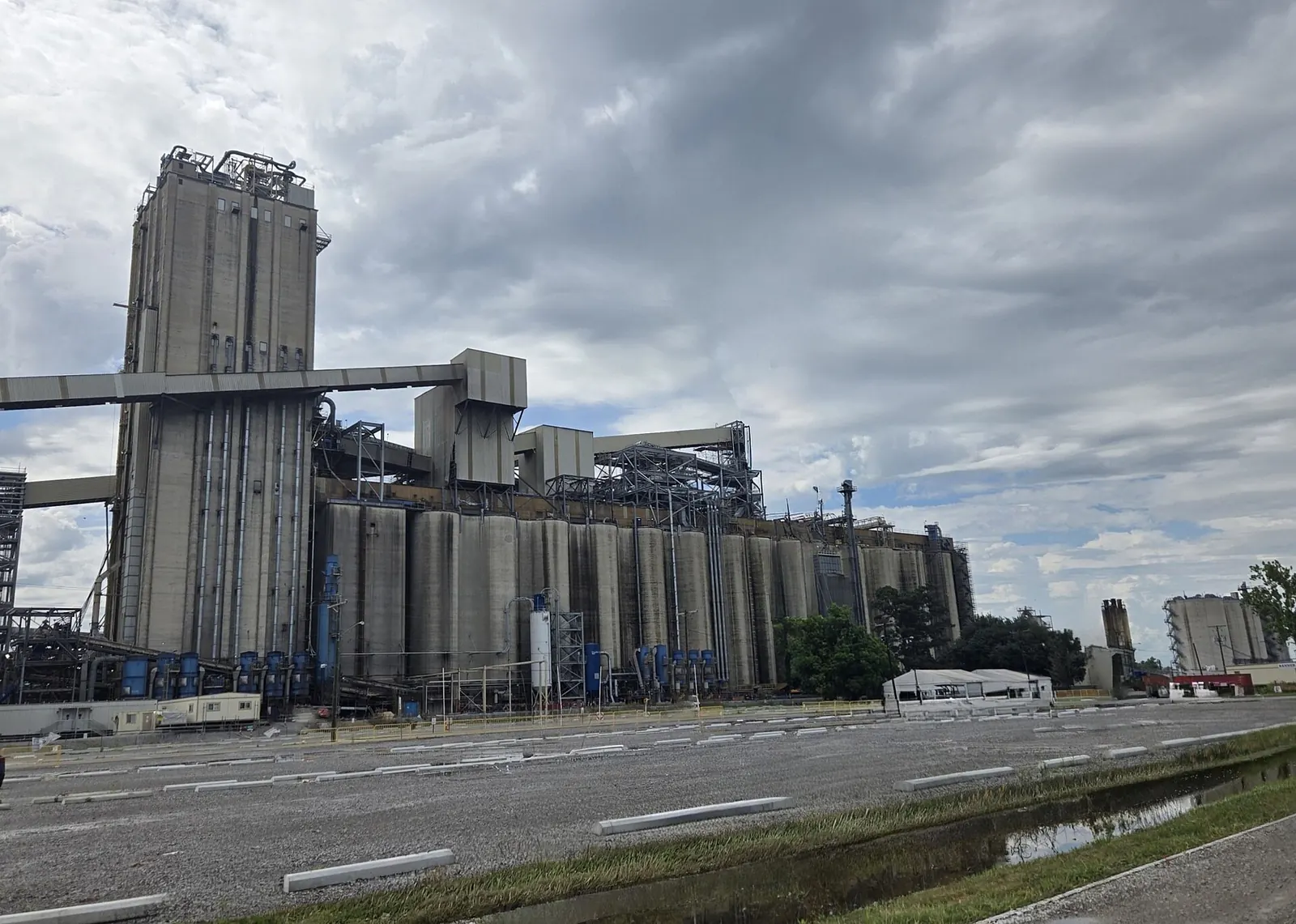
Canola oil and soybean oil are made in plants like these. The seeds are crushed, a solvent pulls out the rest of the oil, and the oil is then refined, bleached and deodorized into the clear oil on the shelf. Our seed oils guide walks through each step and what the research says.
Canola oil plant: Bunge's canola seed crushing plant on Victoria Avenue North in Hamilton, Ontario, October 2023. Photo: Kenneth C. Zirkel · CC BY 4.0 · sourceSoybean oil plant: the grain elevator and soybean crushing plant at the Bunge Destrehan terminal in Destrehan, Louisiana. Photo: Spatms · CC BY-SA 4.0 · source
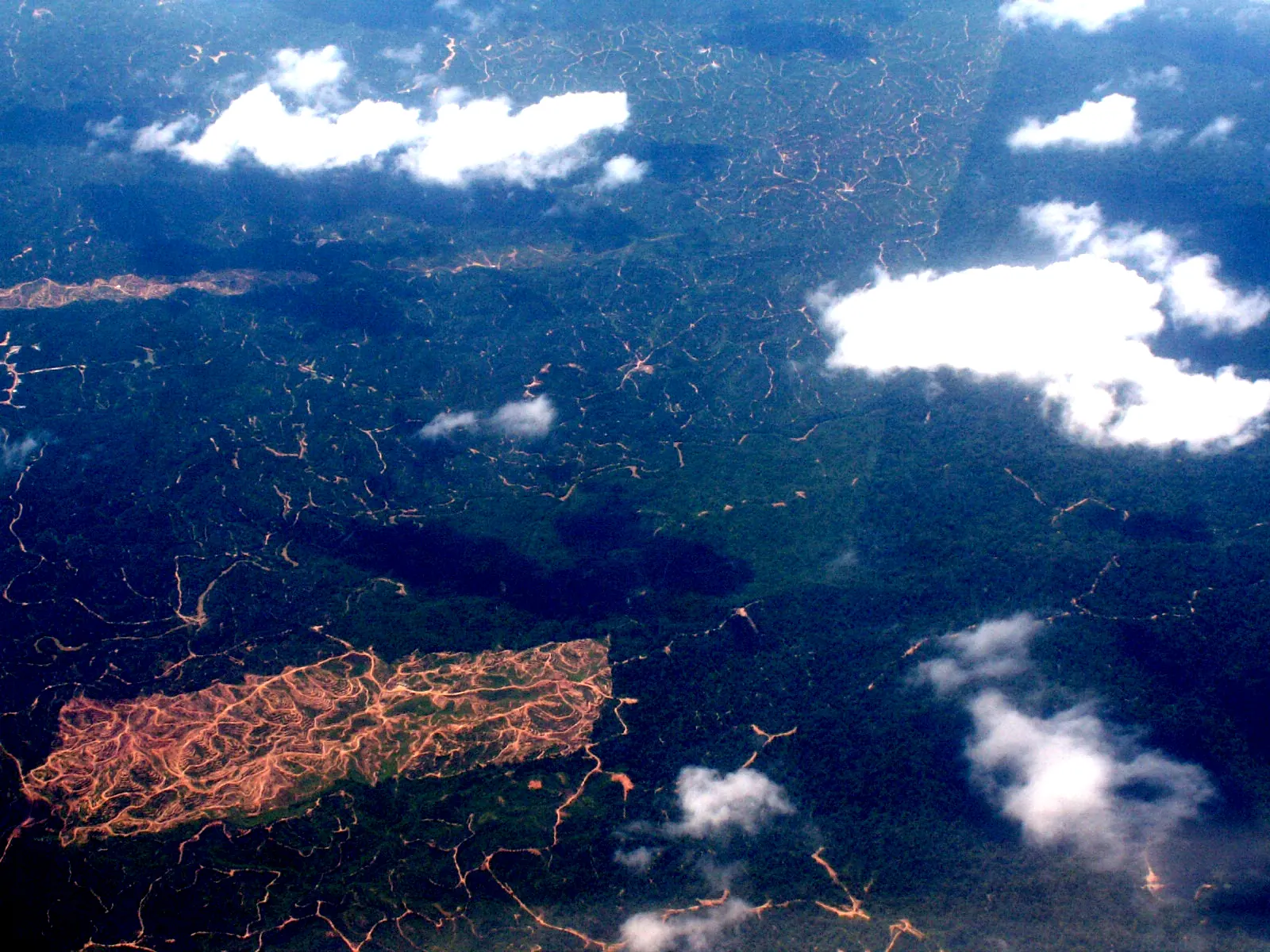
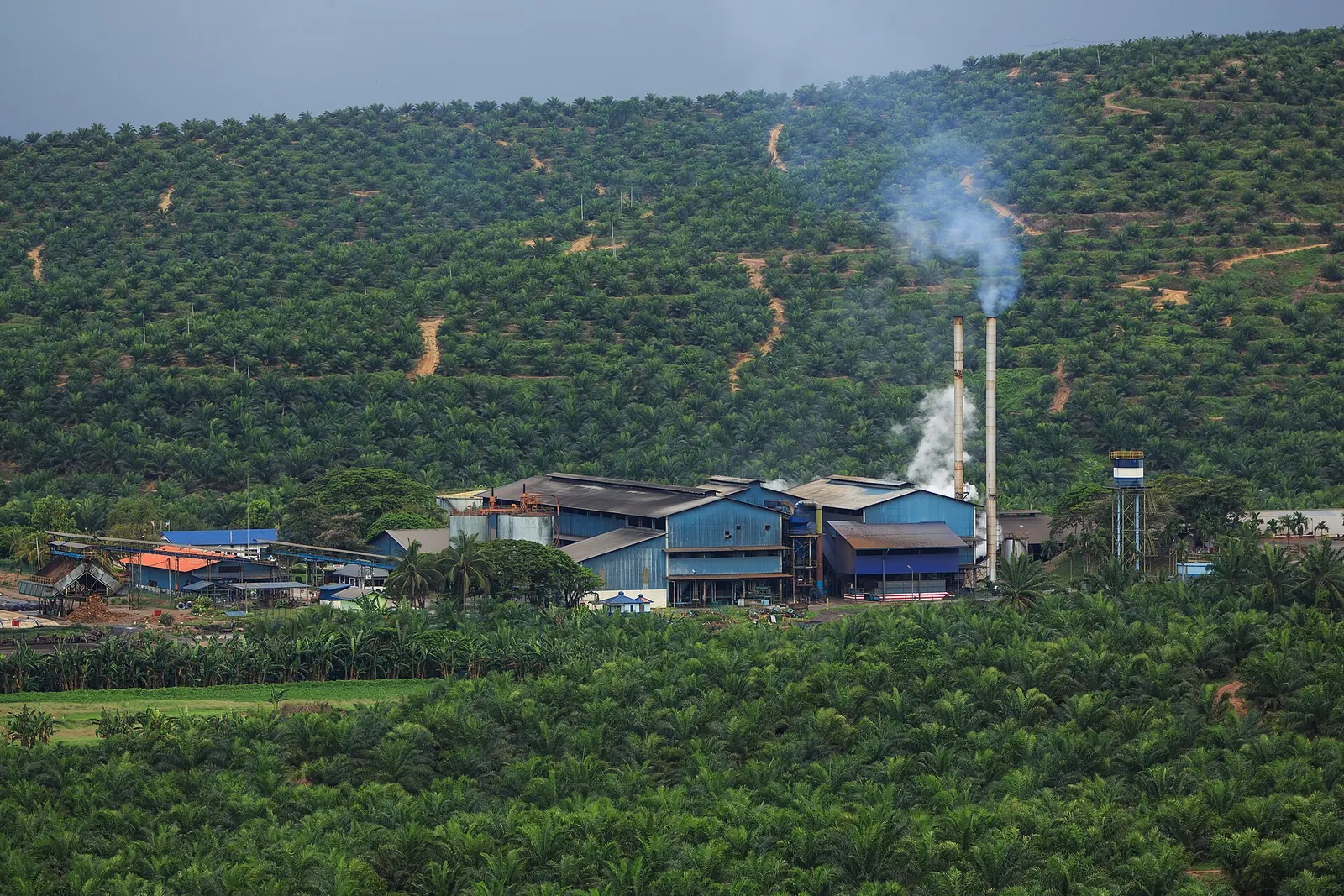
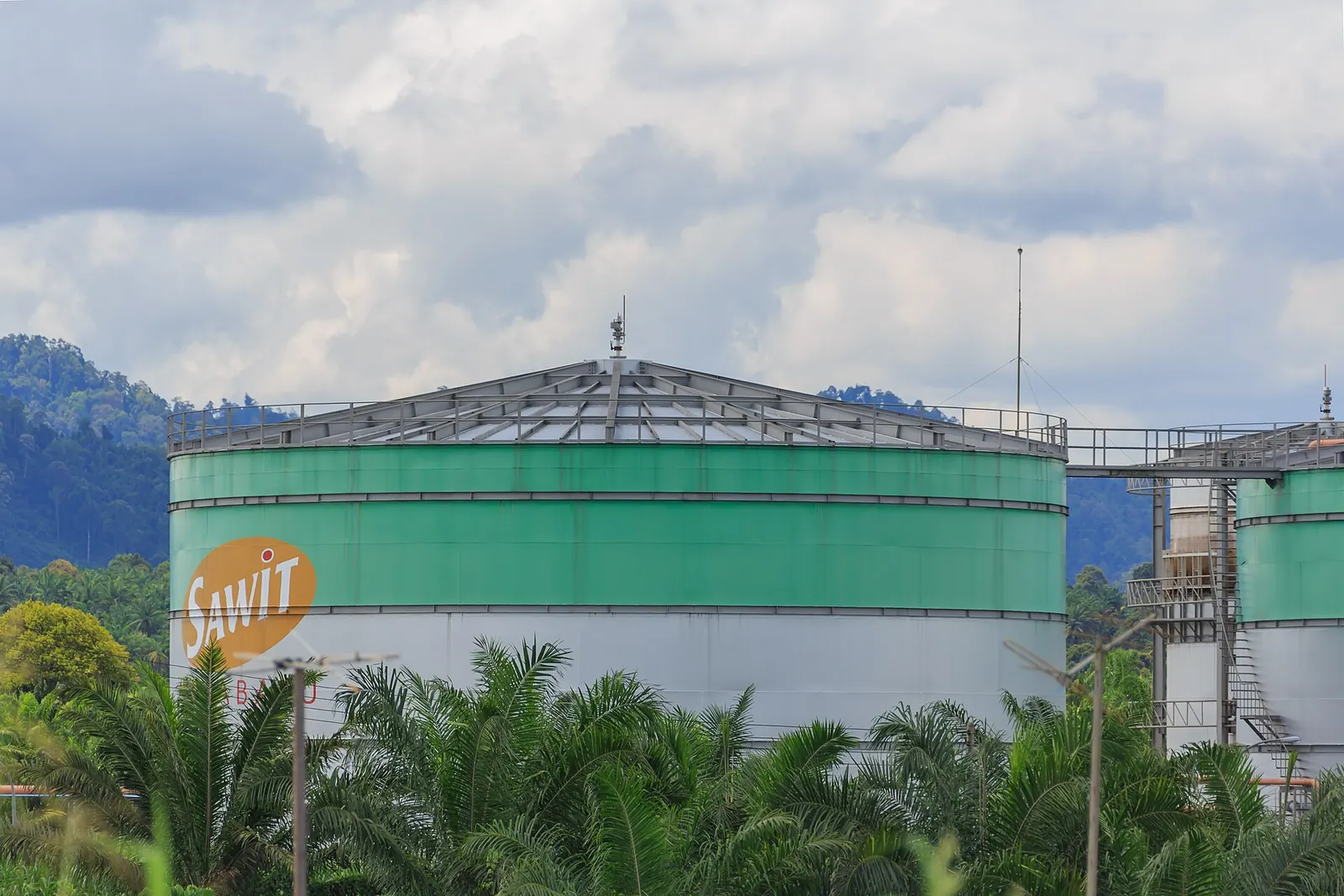
Palm oil isn’t a seed oil, but it’s the fat in a long list of packaged foods. In Malaysian Borneo, rainforest has been cleared for oil palm plantations, and mills process the fruit on site.
Palm oil deforestation: aerial view of land newly cleared for an oil palm plantation in Sabah, Malaysian Borneo (2005). Photo: T. R. Shankar Raman · CC BY-SA 4.0 · sourceThe IOI Baturong palm oil mill in Kunak District, Sabah, Malaysia, surrounded by oil palm plantation (2015). Photo: CEphoto, Uwe Aranas · CC BY-SA 3.0 · sourceStorage tanks for palm oil at the Apas Balung palm oil mill, operated by SAWIT Kinabalu, in Balung, Tawau, Sabah, Malaysia (2014). Photo: CEphoto, Uwe Aranas · CC BY-SA 3.0 · source
How french fries and chicken nuggets are made
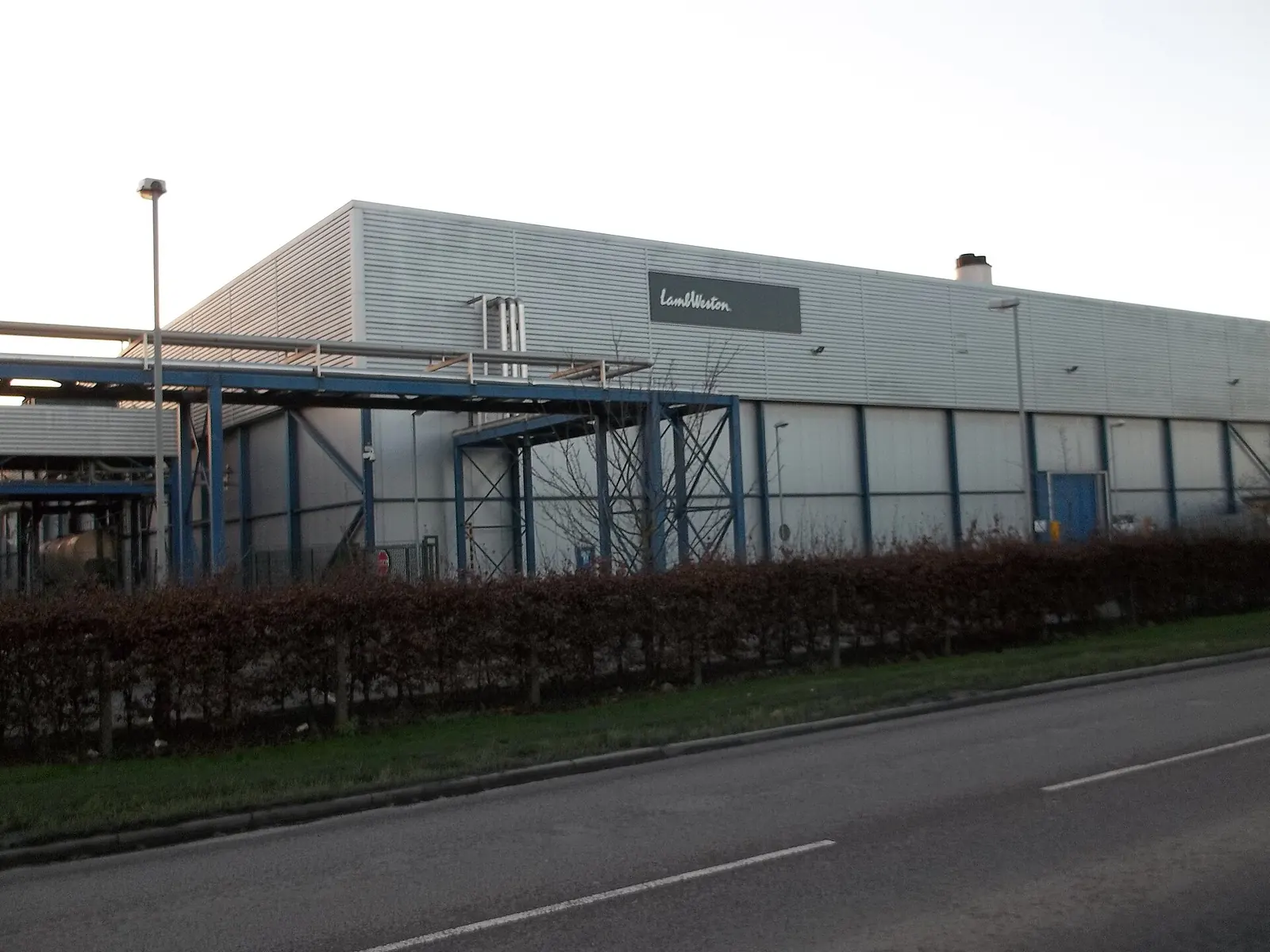
Frozen fries and chicken pieces are made in factories, shipped frozen and finished in a fryer. Most of these plants don’t allow cameras, so the freely licensed photos mostly show the outside, or the steel.
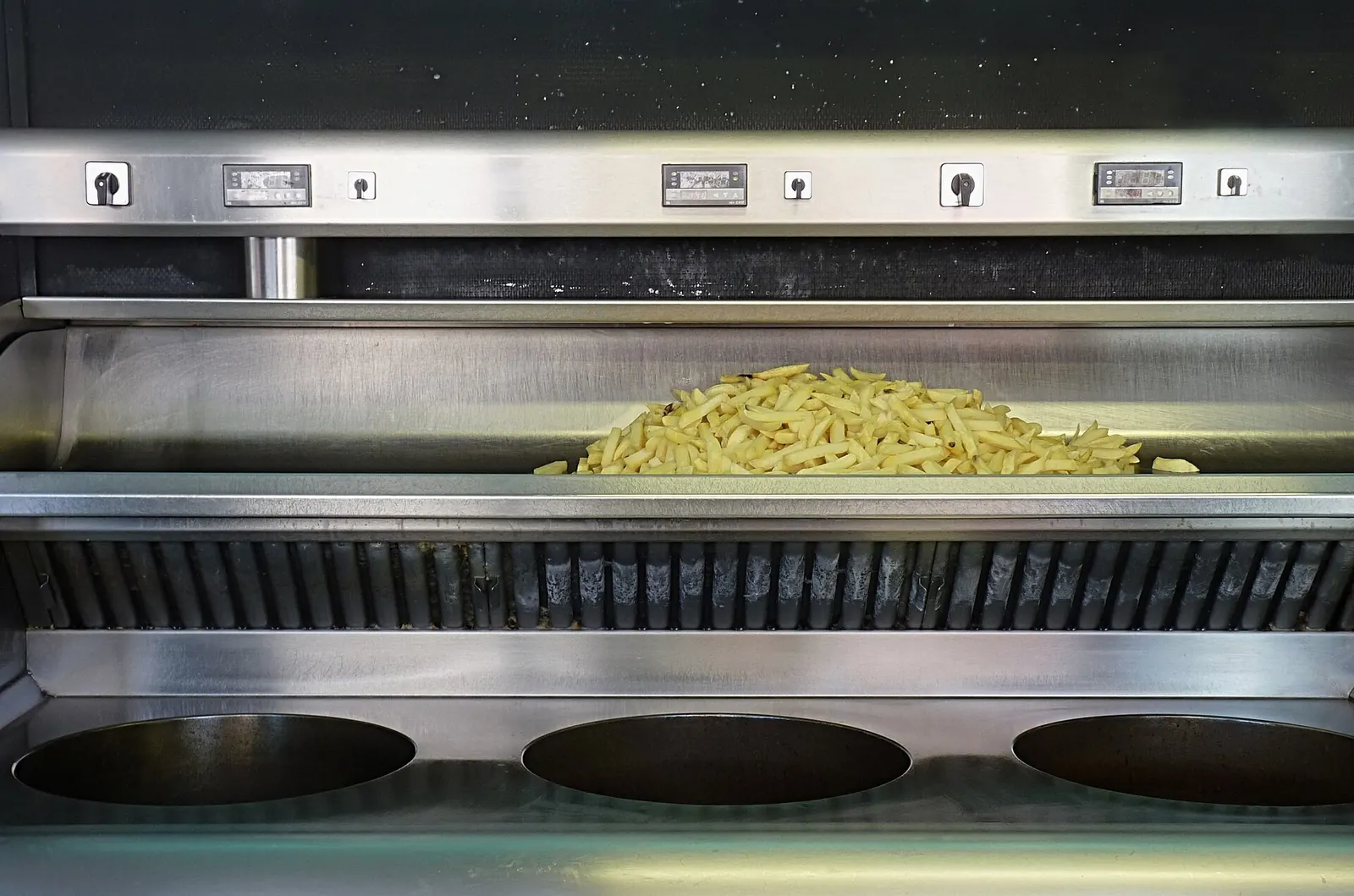
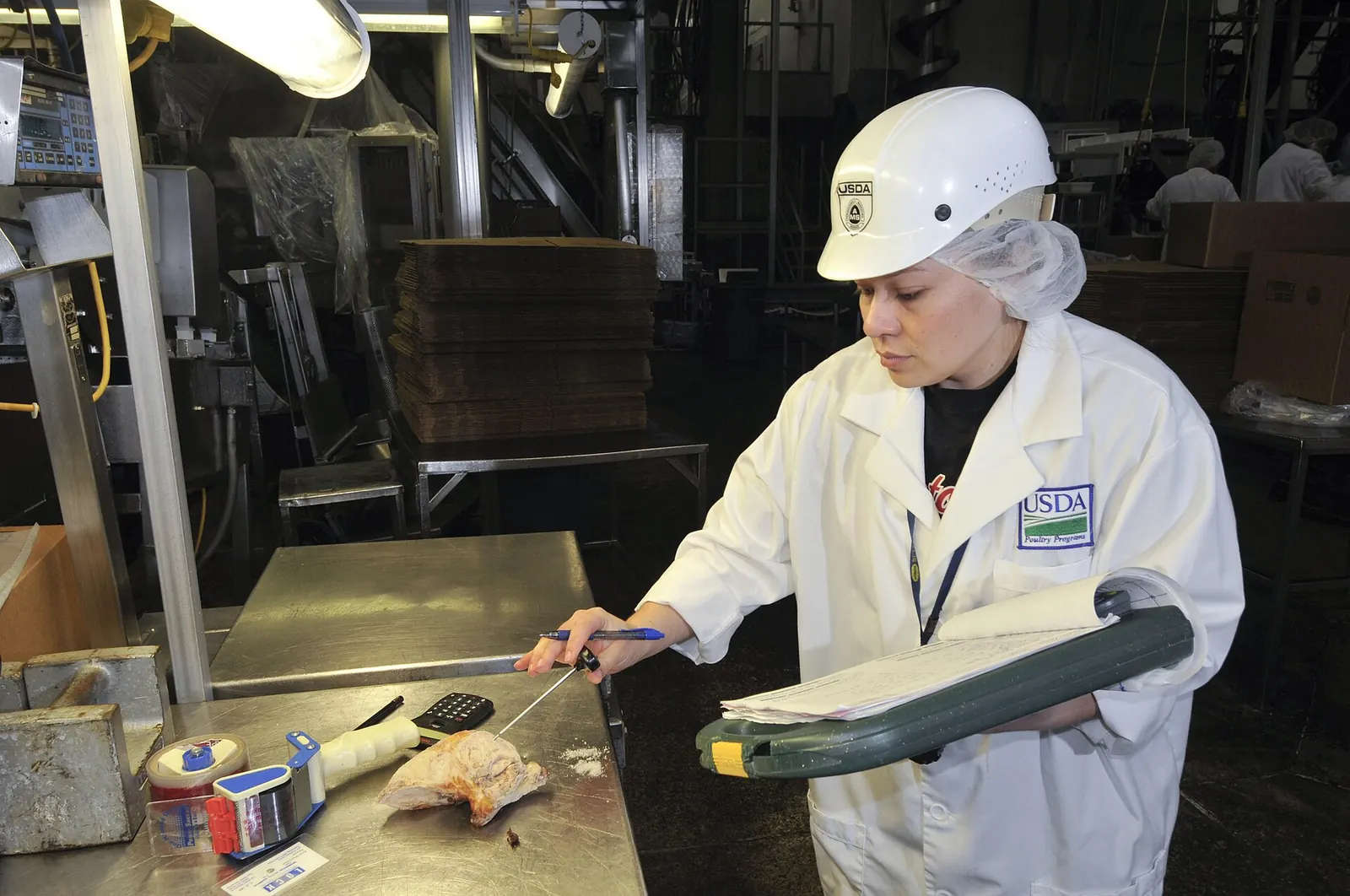
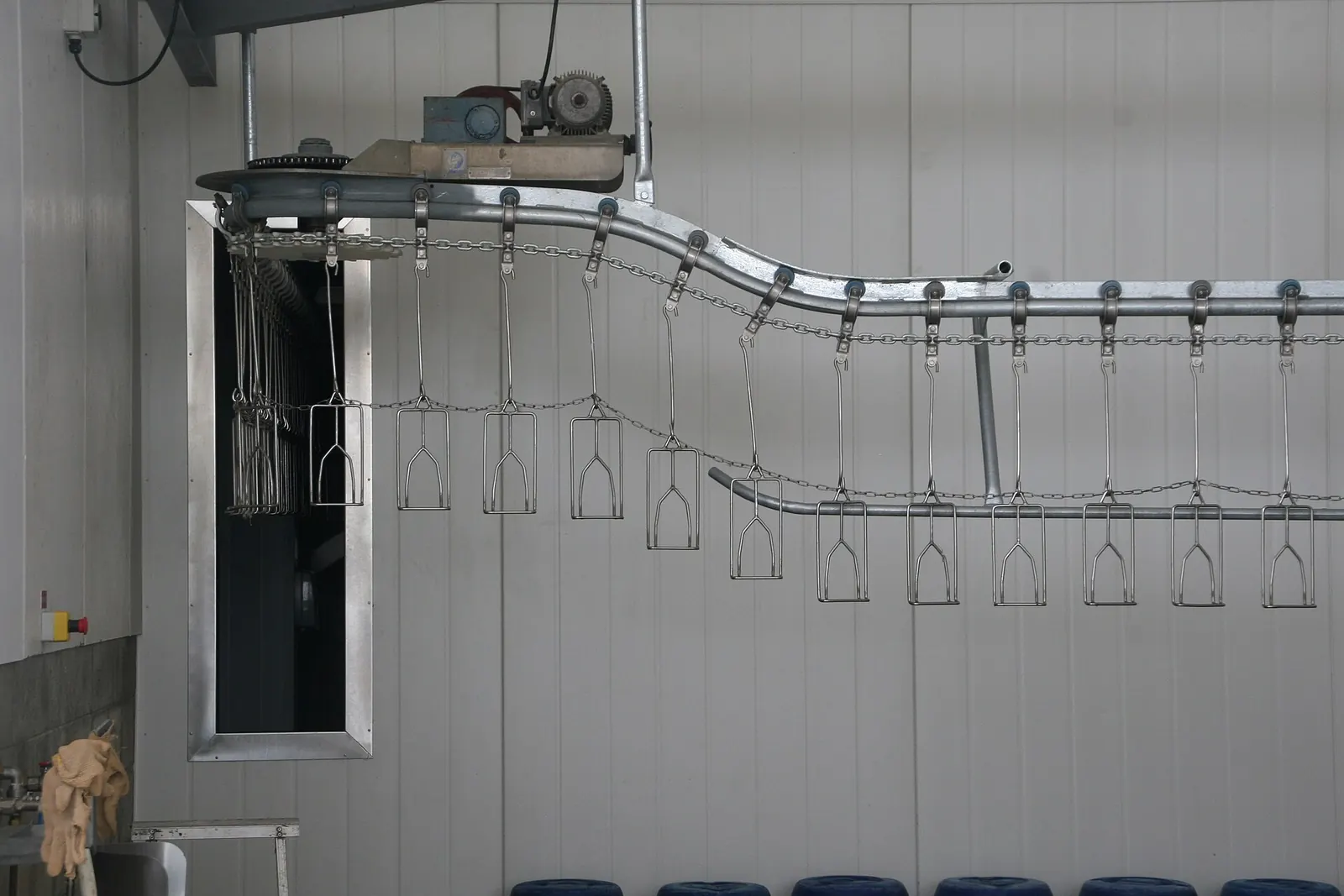
French fry factory: outside the Lamb Weston frozen french fries plant in Wisbech, England (2013). Photo: Bearas · CC BY-SA 3.0 · sourceDeep fryer and French fries in a chip shop in Belgium (2013). Photo: Jamain · CC BY-SA 3.0 · sourceInside a chicken processing plant: a USDA poultry grader checks boxed frozen chicken breasts for temperature, weight and defects at a Tyson Foods plant in Berryville, Arkansas, March 25, 2010. Photo: Bob Nichols, USDA · Public domain (U.S. government work) · sourceEmpty steel shackles on the overhead conveyor of a layer-hen slaughterhouse, photographed in December 2009. Photo: Animal Freedom · CC BY 2.0 · source
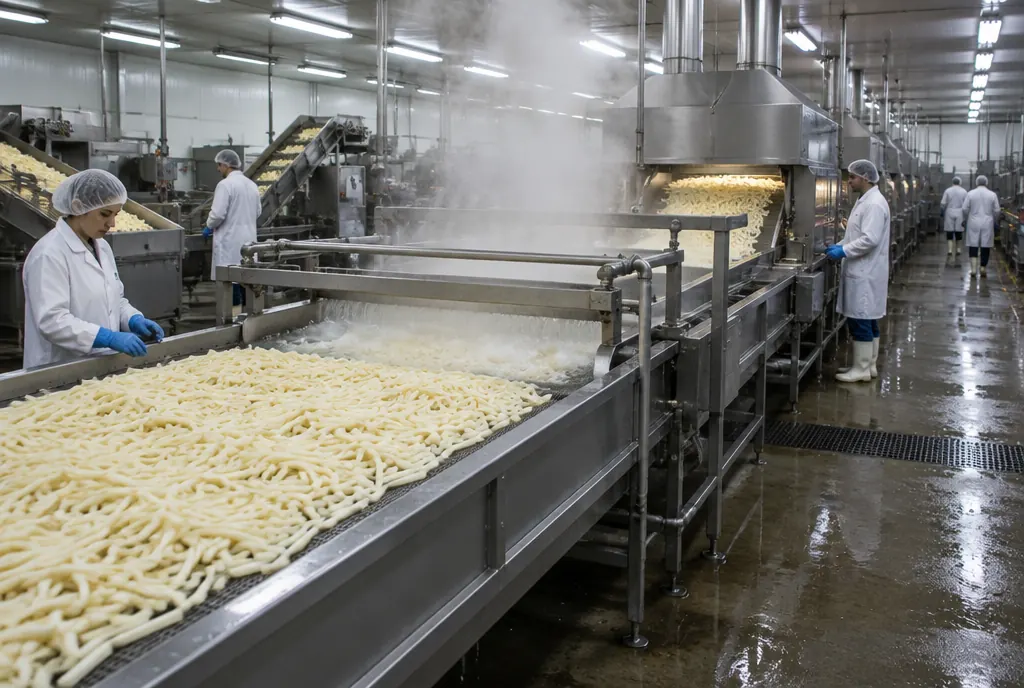
To show what happens inside, here are labelled AI illustrations of a fry line, a nugget line, a deboning line and a fast-food fryer bank.
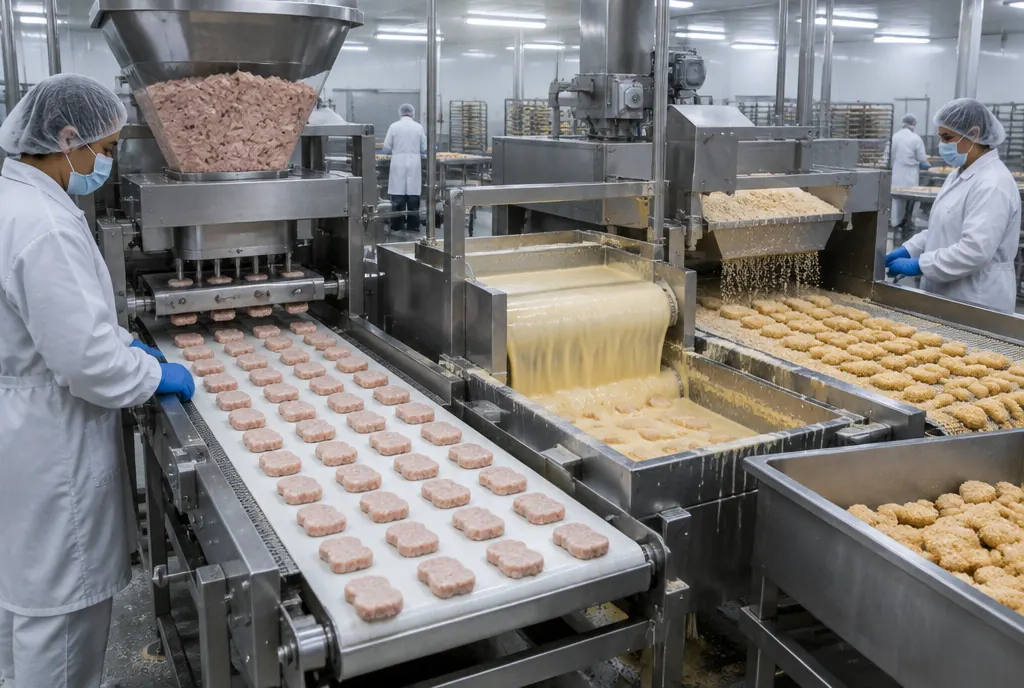
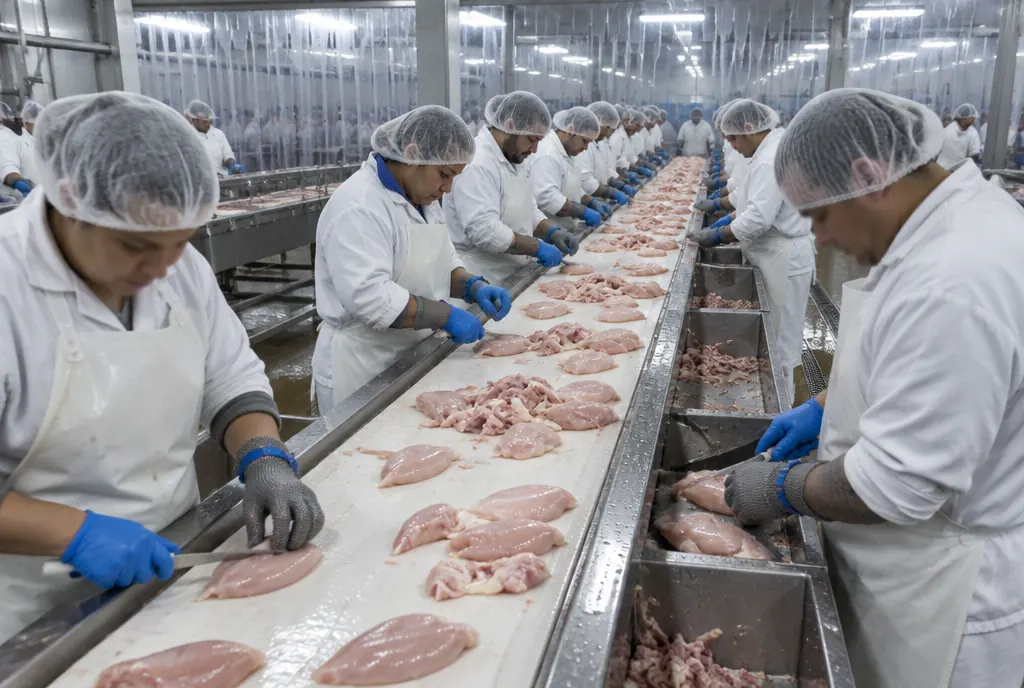
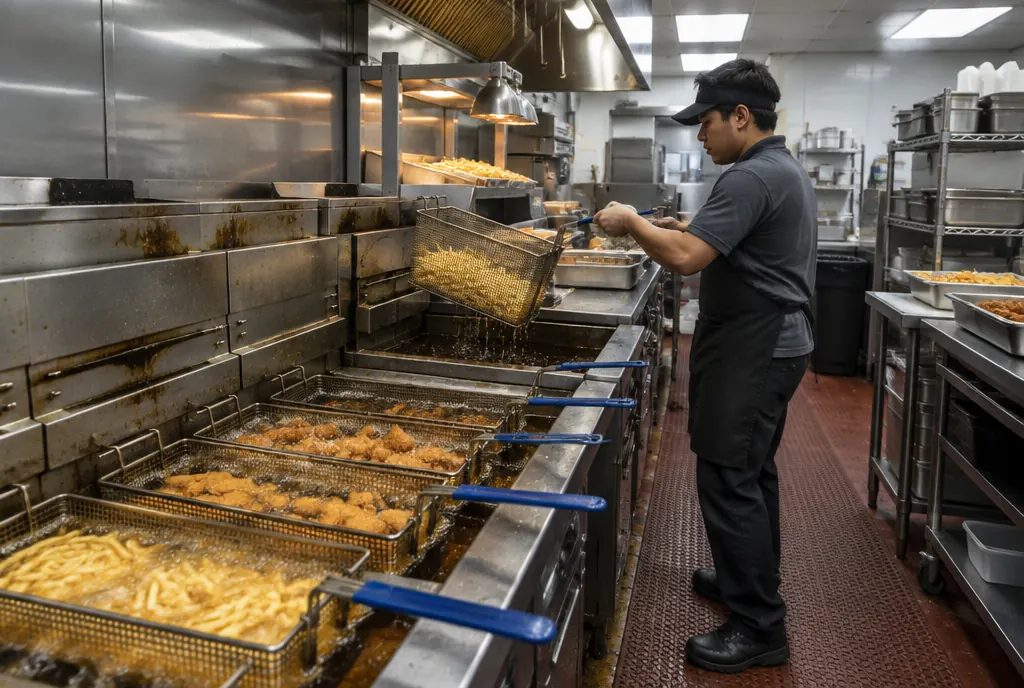
AI-generated Illustration of inside a french fry factory: cut potatoes move on steel conveyors through a steamer and into a fryer, the way frozen fries are made. AI-generated illustration (made with Higgsfield, GPT Image model), not a photograph of a real place. About our AI imagesAI-generated Illustration of how chicken nuggets are made: a machine presses ground chicken into nugget shapes, then they pass through batter and breading on a conveyor. AI-generated illustration (made with Higgsfield, GPT Image model), not a photograph of a real place. About our AI imagesAI-generated Illustration of a chicken processing plant: workers in hairnets and cut-proof gloves stand shoulder to shoulder cutting chicken breasts on a long conveyor. AI-generated illustration (made with Higgsfield, GPT Image model), not a photograph of a real place. About our AI imagesAI-generated Illustration of a fast food kitchen: a row of deep fryers with baskets of fries and breaded chicken in bubbling oil under heat lamps. AI-generated illustration (made with Higgsfield, GPT Image model), not a photograph of a real place. About our AI images
Cattle feedlots and meat packing plants
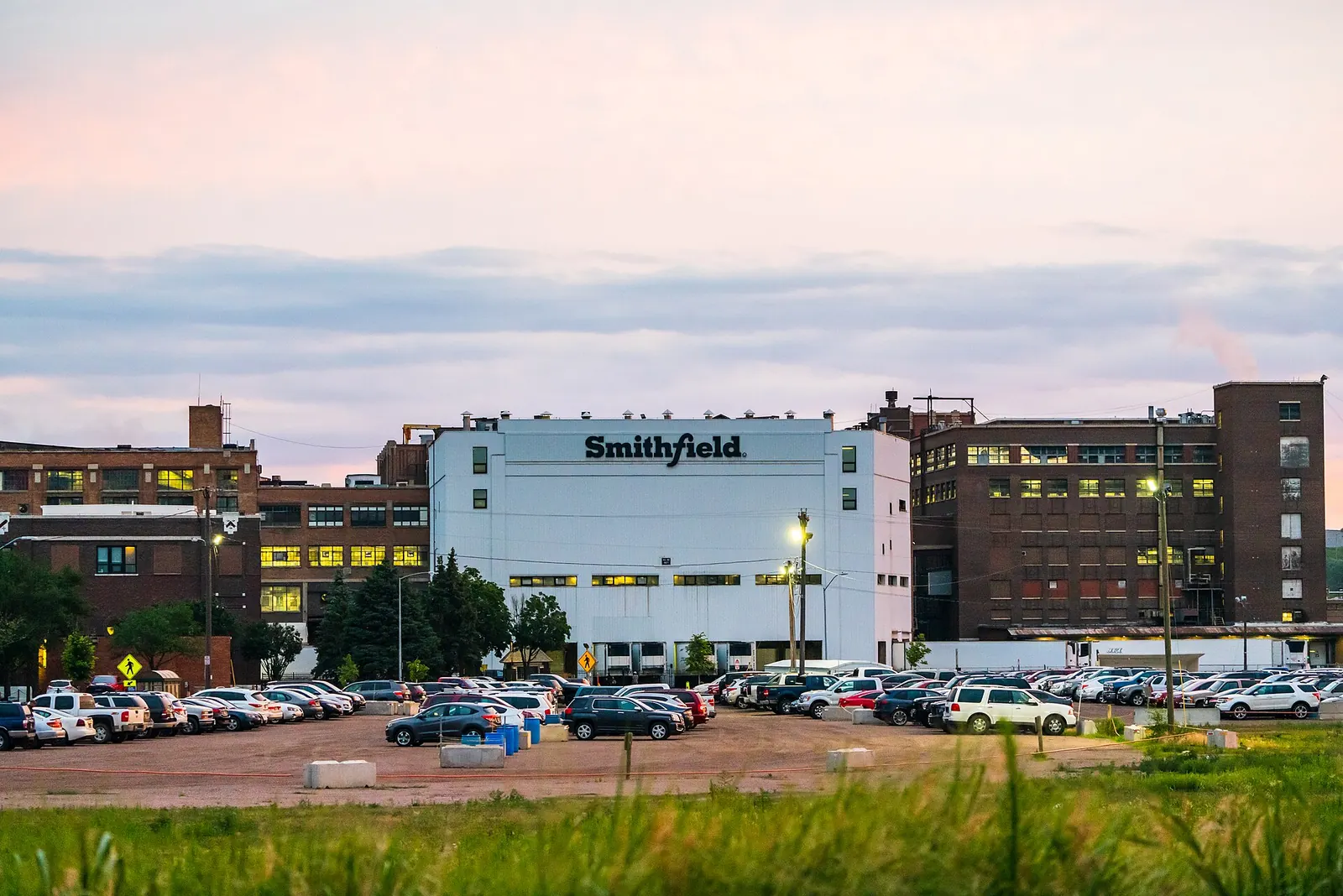
Here is where the meat in the meat case comes from. Concentration is the part you can’t see in a photo. According to USDA’s Economic Research Service, in 2019 the four largest meatpackers handled 85% of steer and heifer slaughter and 67% of hog slaughter. Our food systems guide explains why that matters for prices and for resilience.
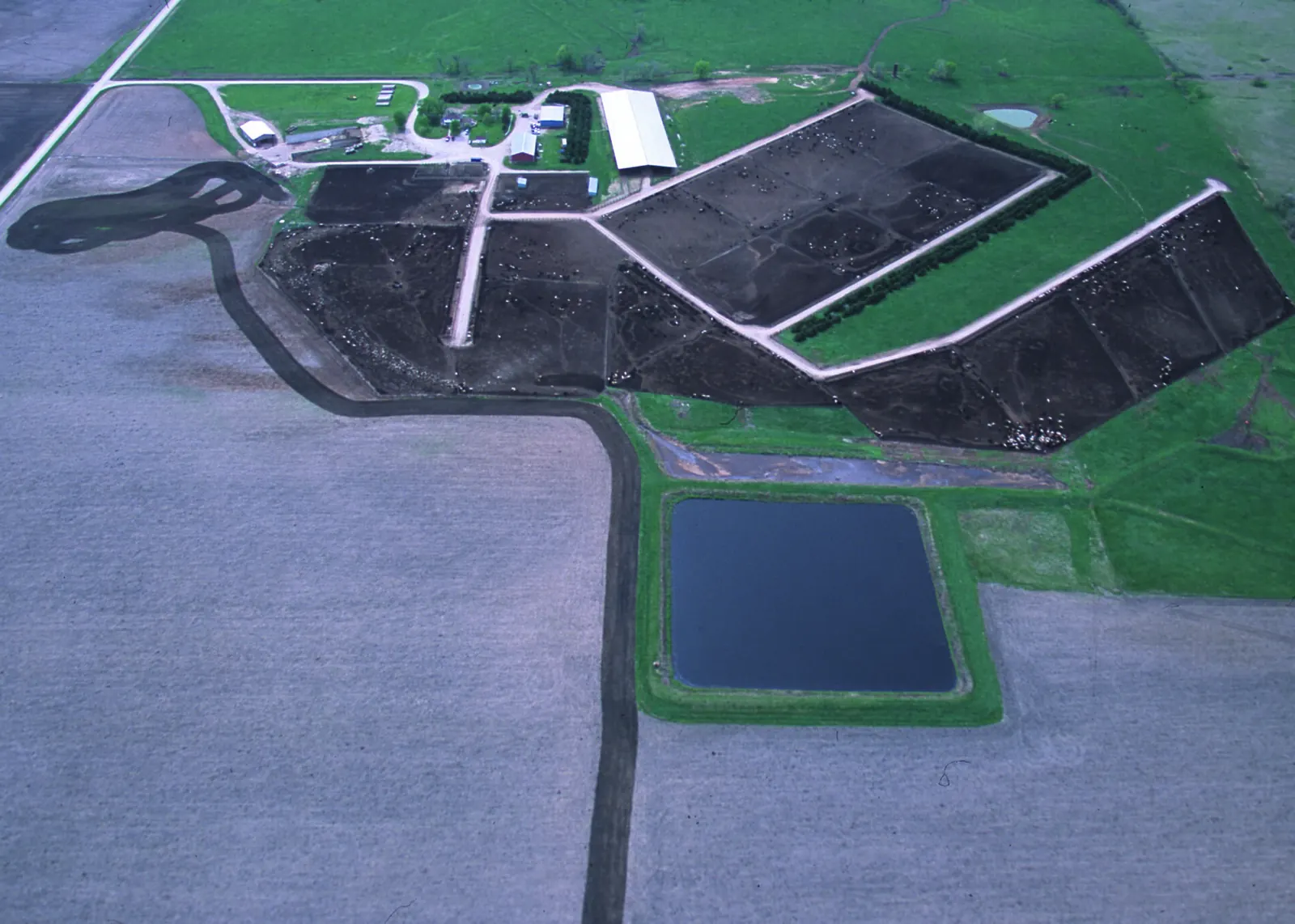
Cattle in pens at a feedlot south of Portales, New Mexico, in October 2024. Photo: Quintin Soloviev · CC BY 4.0 · sourceCattle at the Dawn Cattle Feeders feedlot in Canyon, Texas, June 2021. Photo: Preston Keres, USDA/FPAC · Public domain (U.S. government work) · sourceManure lagoon: aerial view of a waste lagoon beside a cattle feedlot in Kansas, from the USDA NRCS photo gallery. Photo: Jeff Vanuga, USDA Natural Resources Conservation Service · Public domain (U.S. government work) · sourceMeat packing plant: the Smithfield Foods pork processing plant in Sioux Falls, South Dakota, July 2022. Photo: Tony Webster · CC BY-SA 2.0 · source
Graphic Inside a meat packing plant: workers among rows of hanging pig carcasses in Los Angeles, around 1945. Photo: Los Angeles Daily News (UCLA Library Special Collections) · CC BY 4.0 · source
Factory farming: caged chickens, gestation crates and pig farms
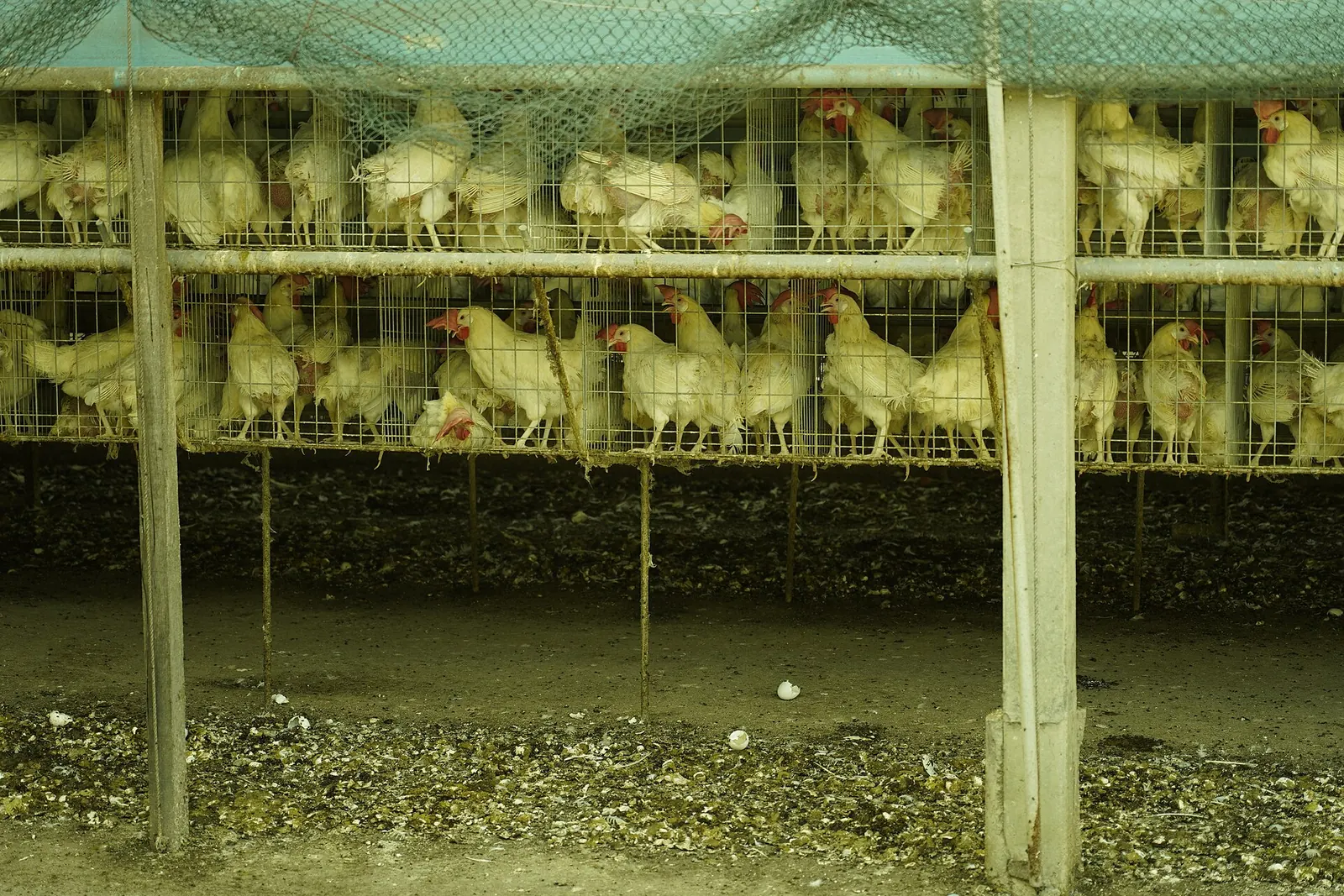
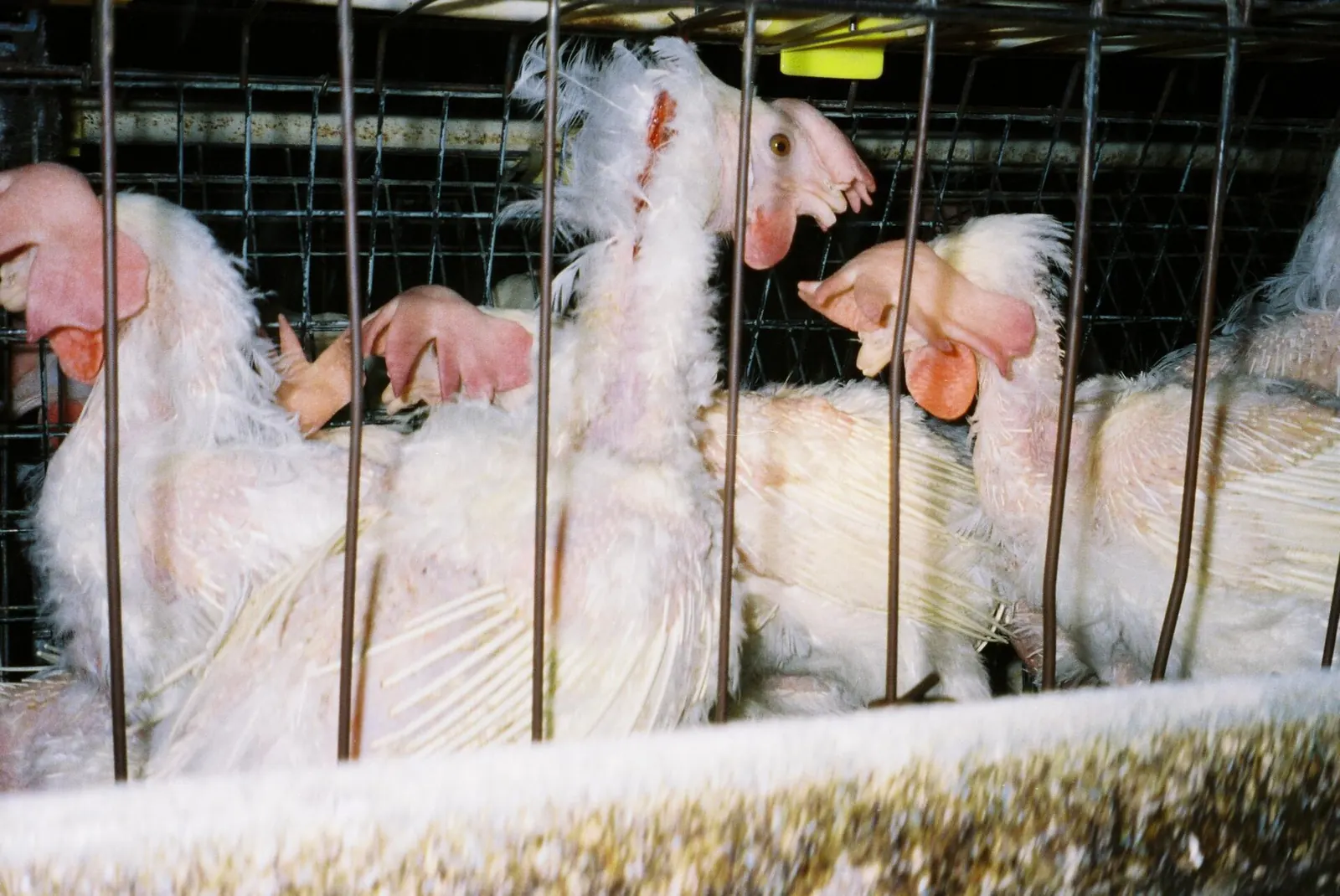
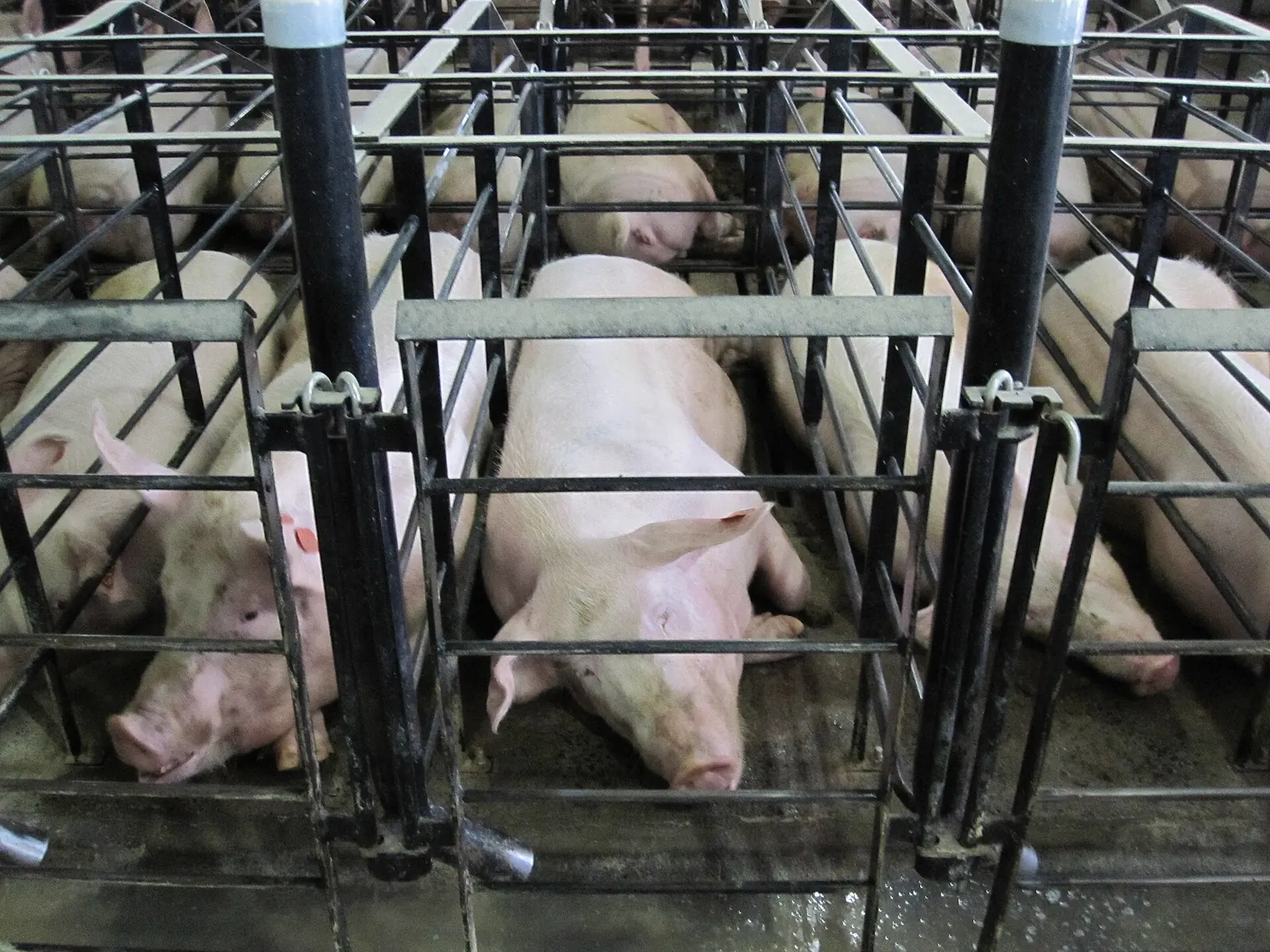
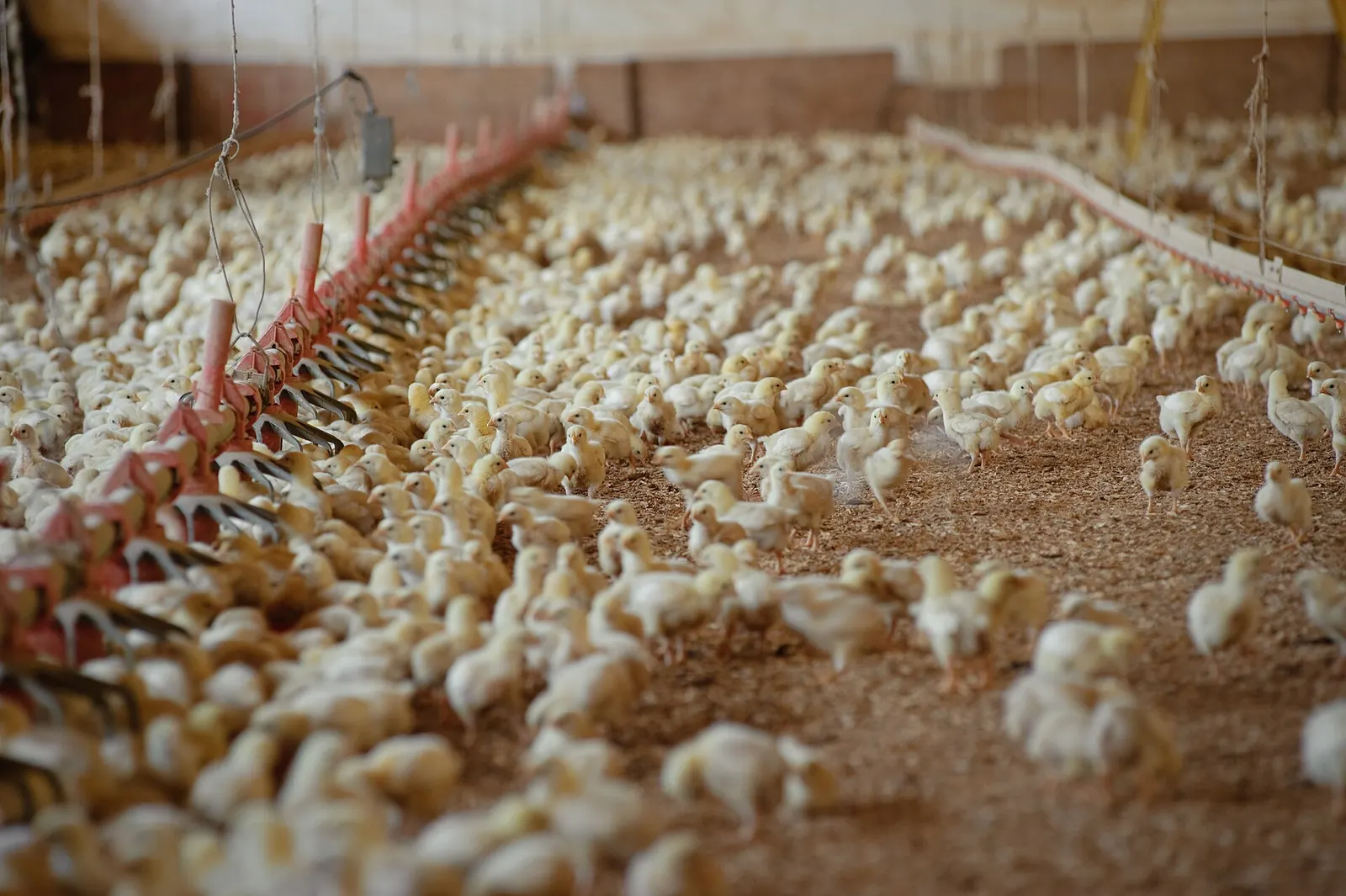
Battery cages for laying hens and gestation crates for sows are the images most people picture when they hear “factory farm”. Two of these photos come from animal-welfare investigations. They show conditions at those farms on those dates, not every farm. Our egg label guide explains what “cage-free”, “free-range” and “pasture-raised” legally mean.
Hens crammed into wire battery cages at a commercial egg farm, photographed during a 2018 animal-welfare investigation. Photo: Lever Foundation · CC0 · sourceLaying hens in stacked wire cages at an Ohio egg farm, photographed during a 2004 Mercy For Animals investigation. Photo: Mercy For Animals · CC BY 2.0 · sourceSows confined in individual metal gestation crates at a U.S. pig farm, photographed during a 2009 Mercy For Animals investigation. Photo: Mercy For Animals · CC BY 2.0 · sourceChicken farm: young chickens crowd the floor of a broiler house, photographed by USDA NRCS in Texas (2009). Photo: USDA NRCS Texas · Public domain (U.S. government work) · source
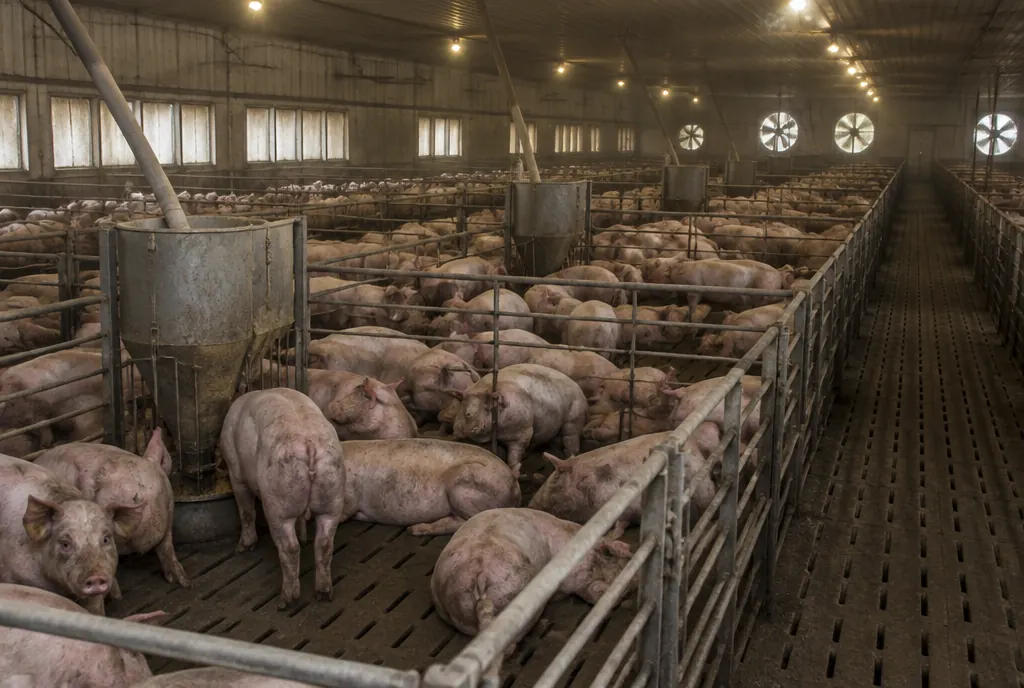
AI-generated Illustration of inside a factory farm pig barn: hundreds of pigs crowded in pens on concrete floors under dim lights and big fans. AI-generated illustration (made with Higgsfield, GPT Image model), not a photograph of a real place. About our AI images
How chips, Doritos and corn syrup are made
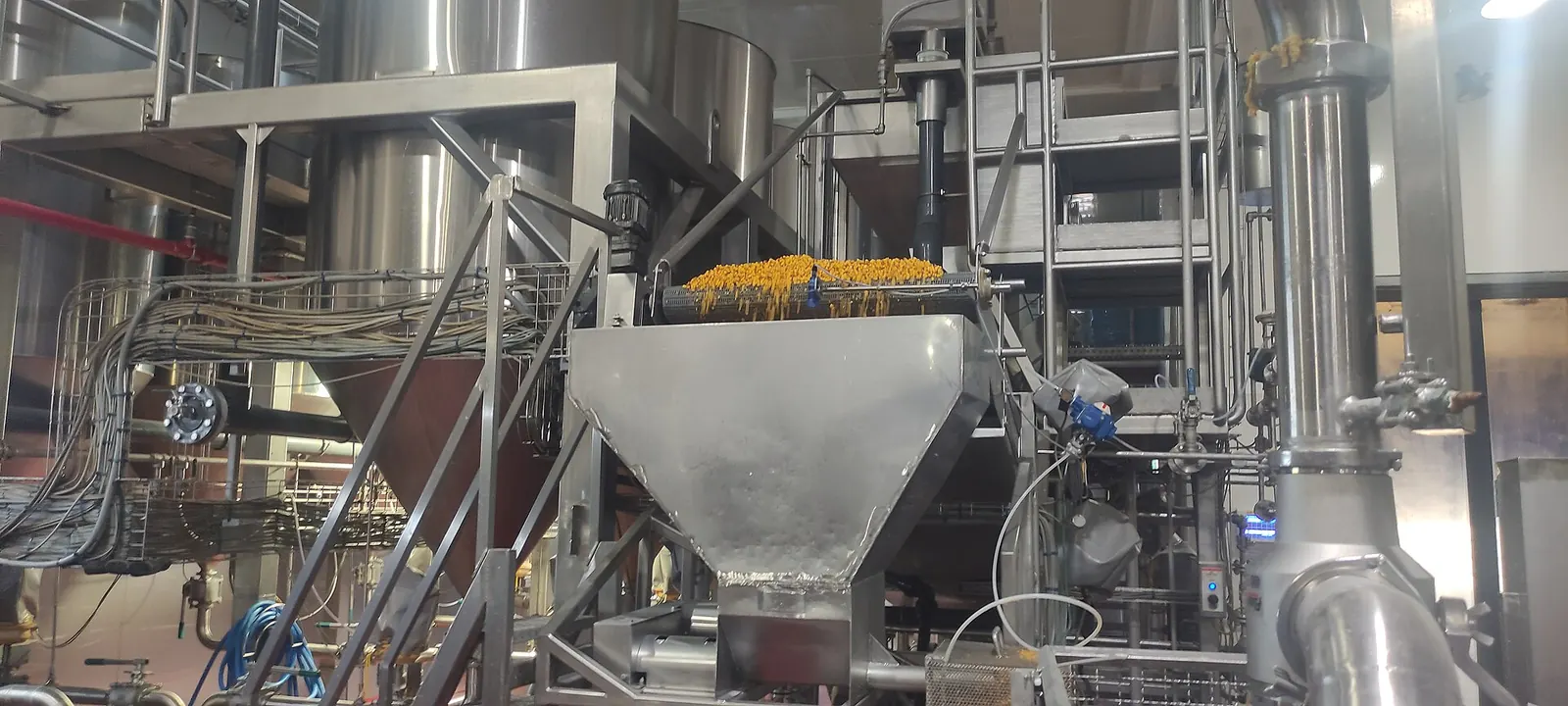
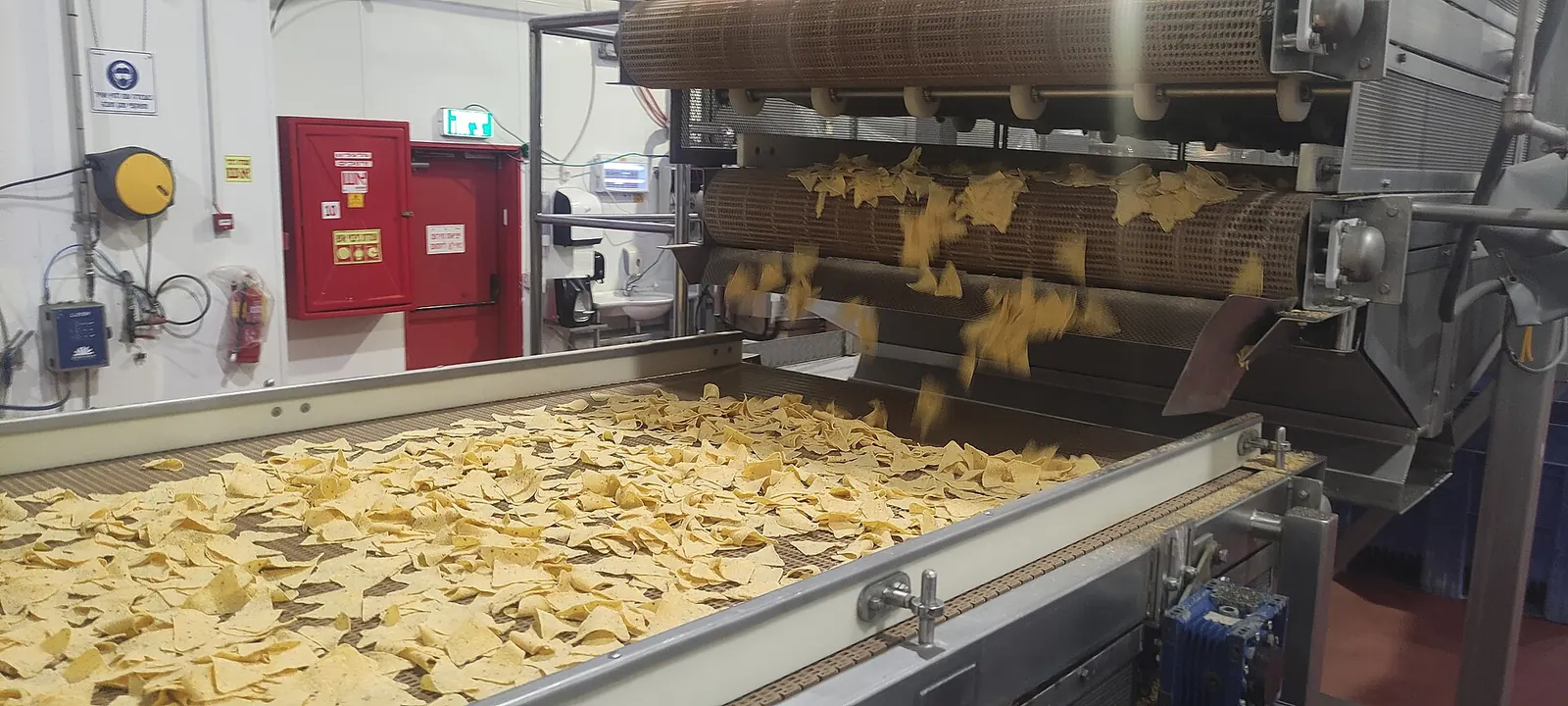
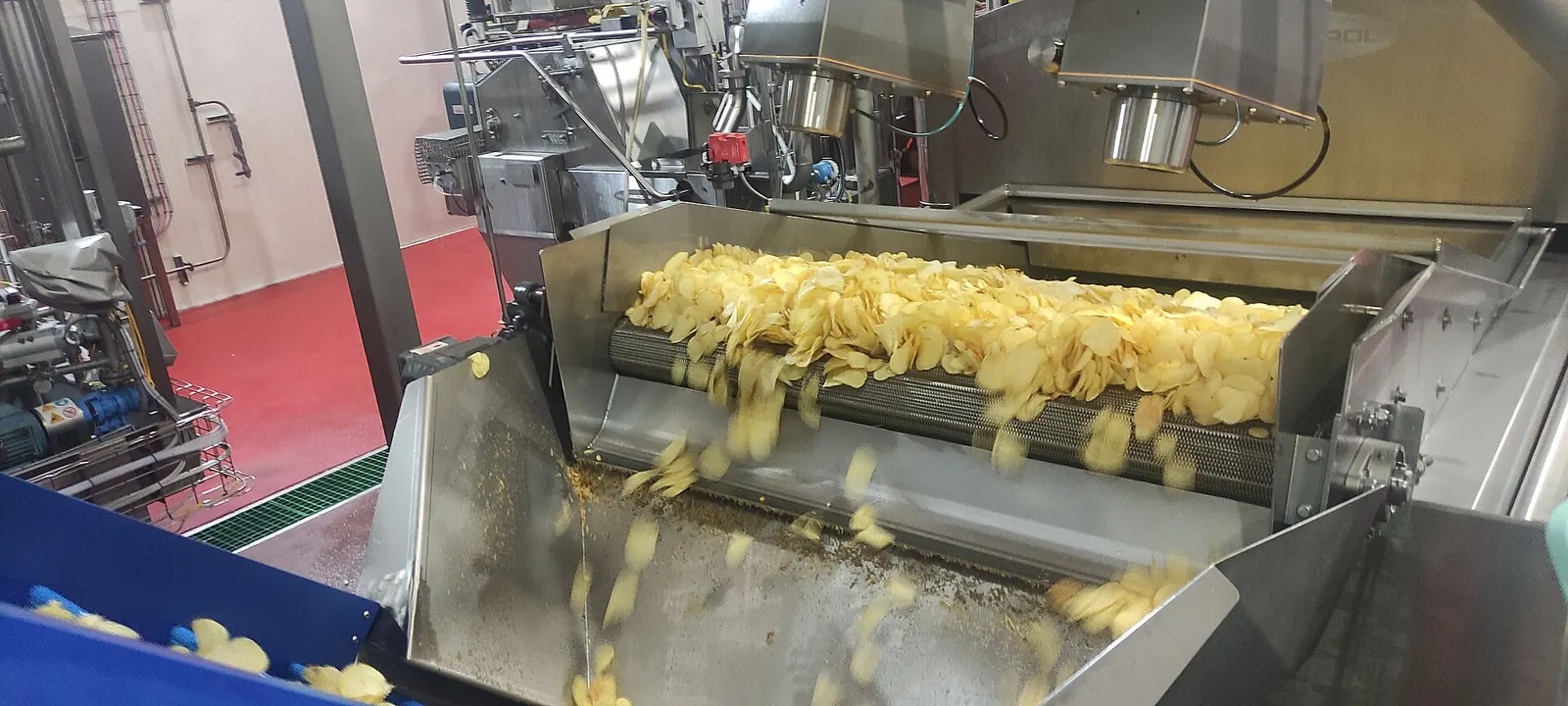
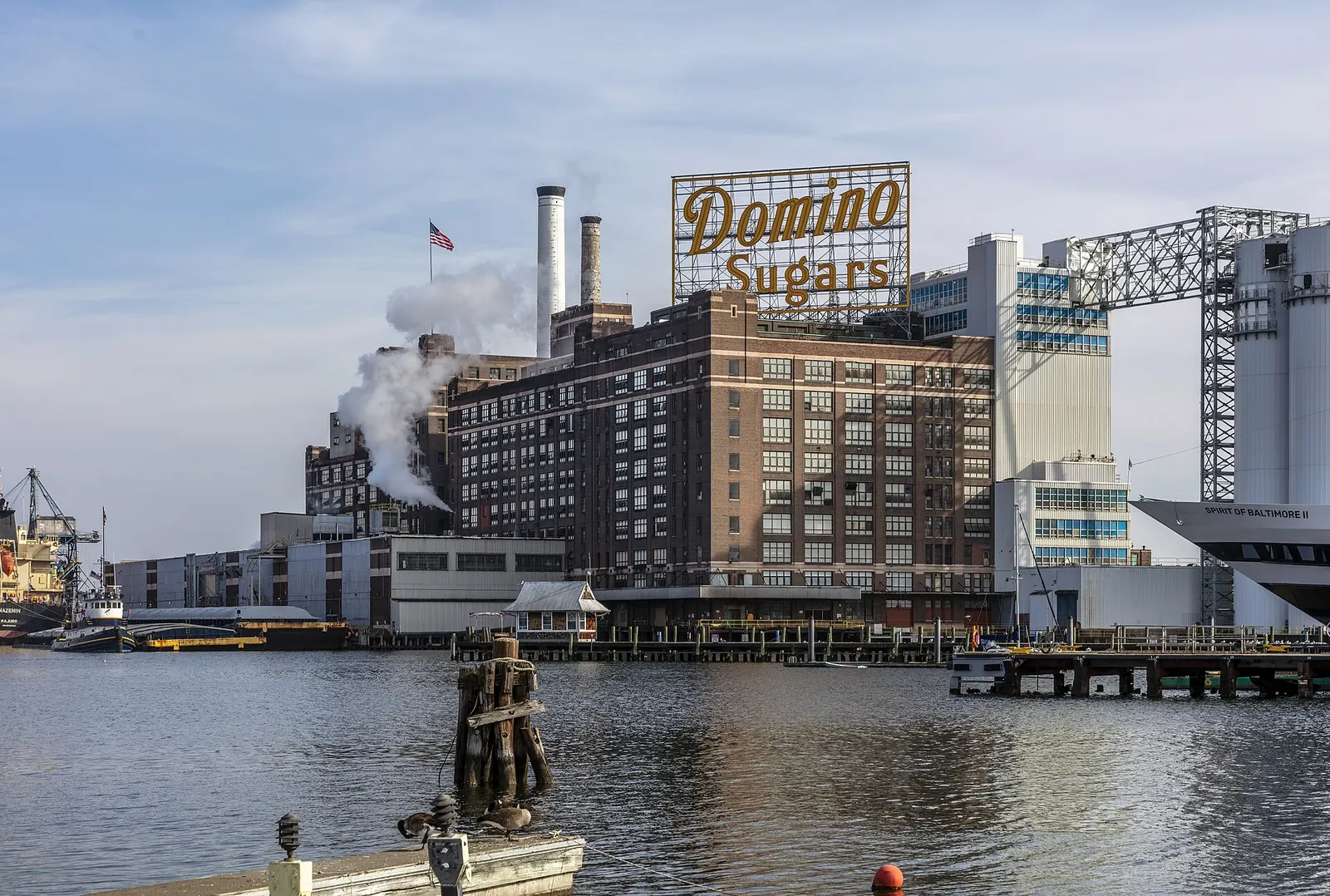
Ultra-processed food is made on lines like these: corn becomes dough, then chips, then a bag. Corn wet mills turn corn into starch and syrups, and sugar refineries supply the rest of the sweet. Our ultra-processed foods list shows how to spot these ingredients on a label.
The Doritos line at the Strauss Group salty snacks factory in Sderot, where cooked corn is made into dough (November 2023). Photo: Nizzan Cohen · CC BY 4.0 · sourceHow Doritos are made: tortilla chips fall from a seasoning drum onto a conveyor on the Doritos line at the Strauss Group factory in Sderot (November 2023). Photo: Nizzan Cohen · CC BY 4.0 · sourcePotato chip factory: chips on the production line at the Strauss Group snack factory in Sderot (November 2023). Photo: Nizzan Cohen · CC BY 4.0 · sourceCorn wet mill: one of two corn wet milling plants run by A.E. Staley Manufacturing Company in Lafayette, Indiana, where corn is processed into starch and sweeteners such as corn syrup (2008). Photo: Jim Hammer · CC BY-SA 2.0 · source
The Domino Sugar refinery in Baltimore, Maryland, January 2023. Photo: Acroterion · CC BY-SA 4.0 · source
Crop dusting, irrigation and algae blooms
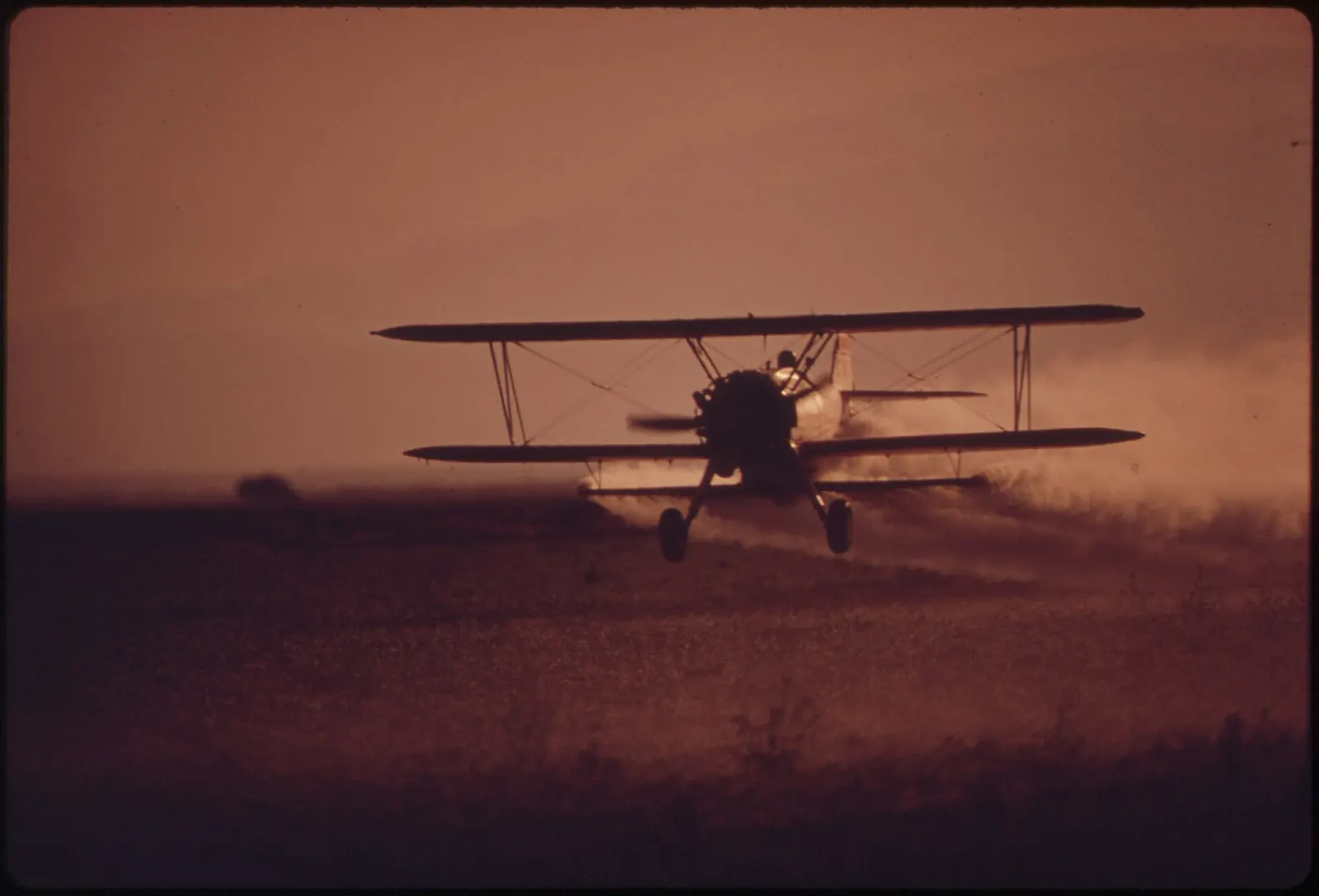
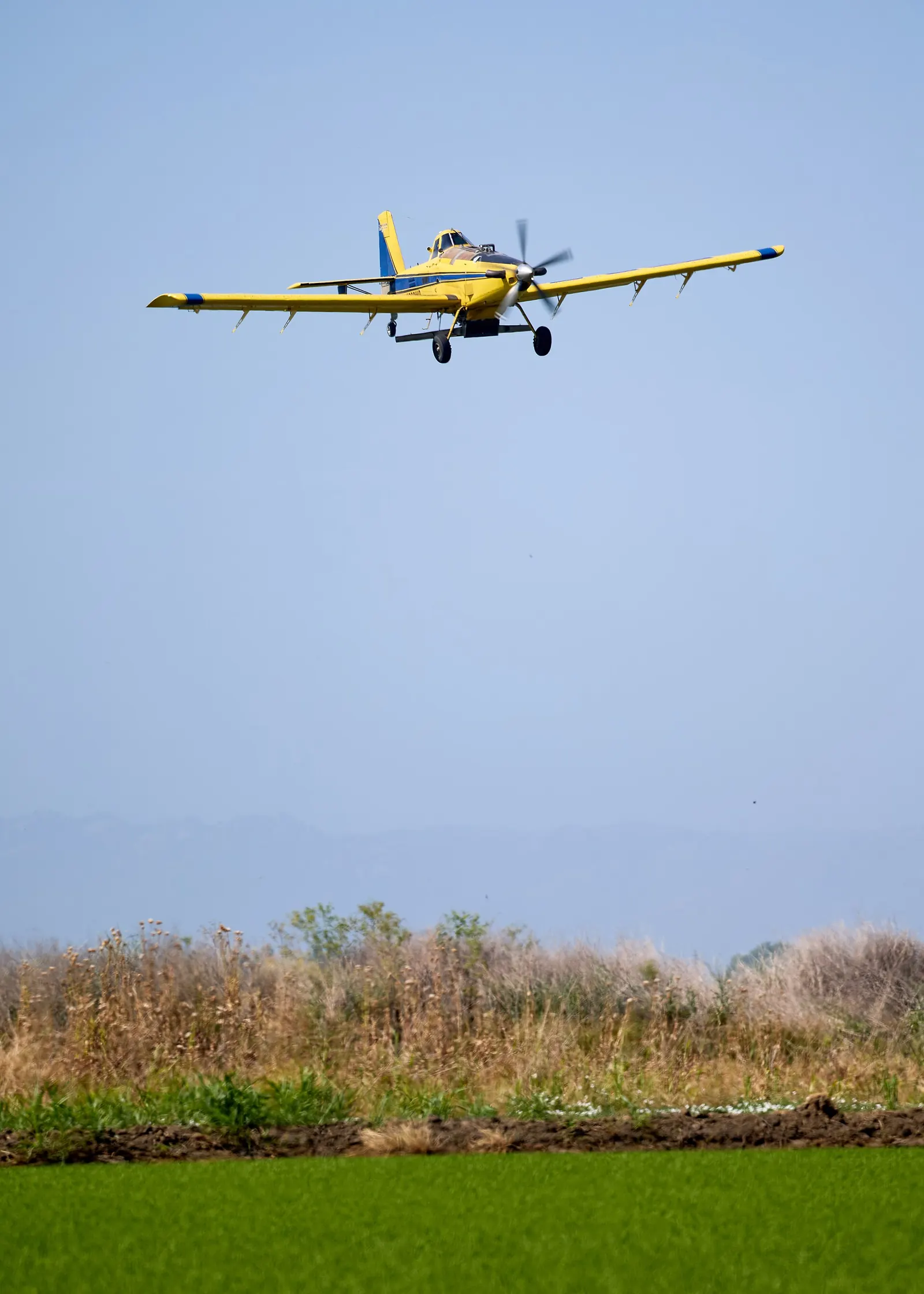
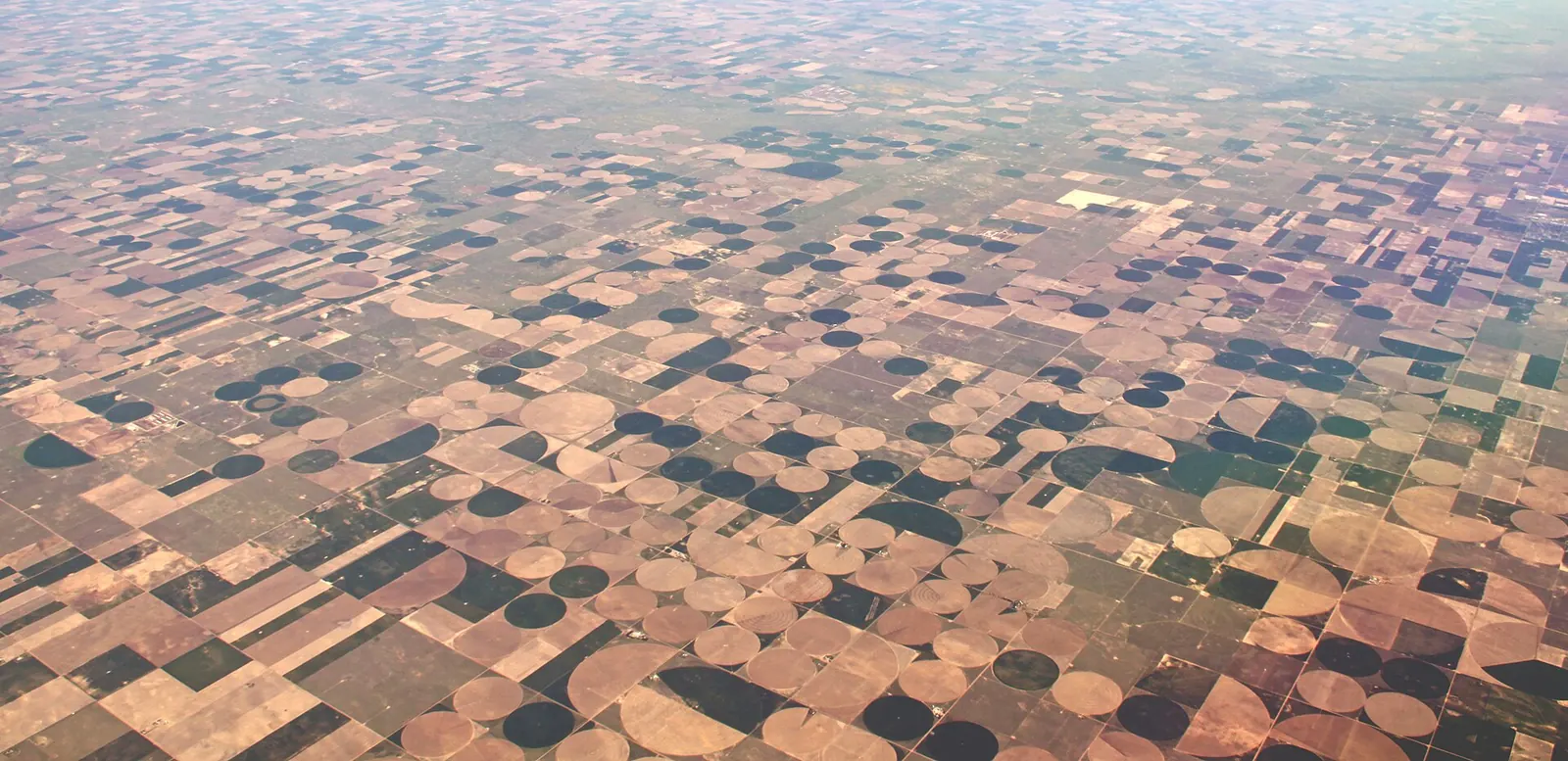
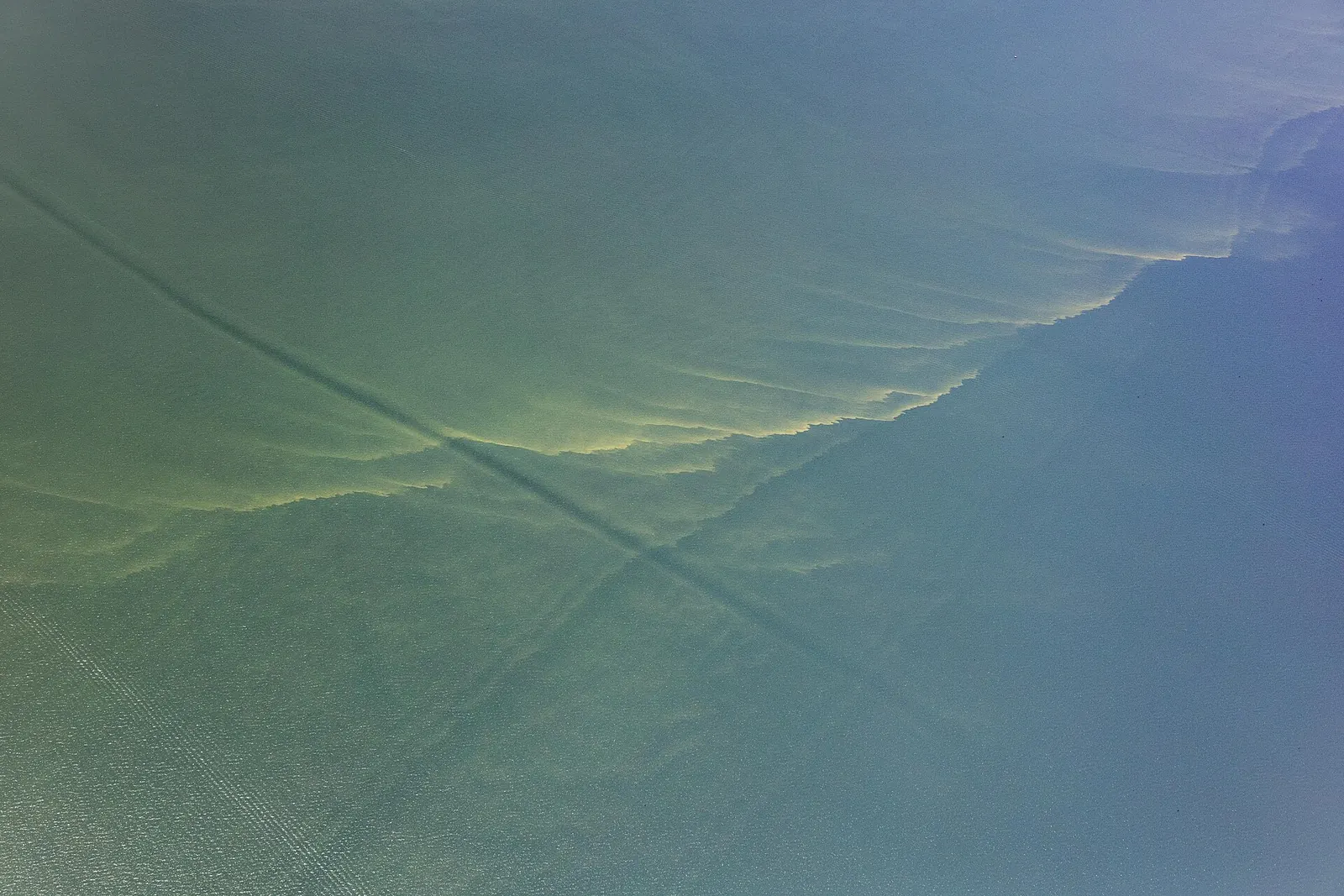
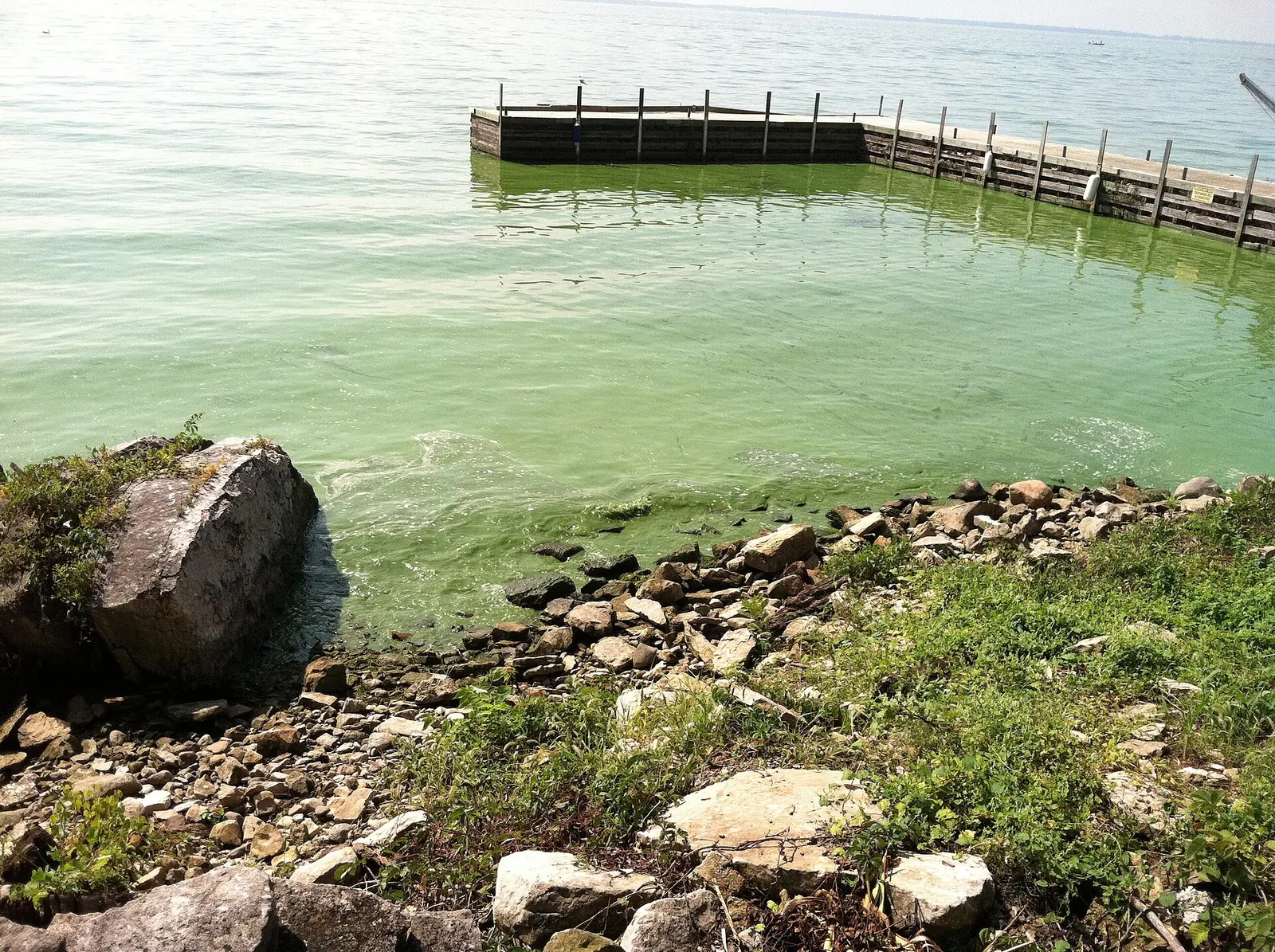
Industrial agriculture covers a lot of ground. Planes spray fertilizer and pesticides, and irrigation pivots water huge single-crop circles. The EPA says nitrogen and phosphorus from fertilizer and manure can wash off fields when it rains. That runoff feeds algal blooms and dead zones, like the green water in Lake Erie below.
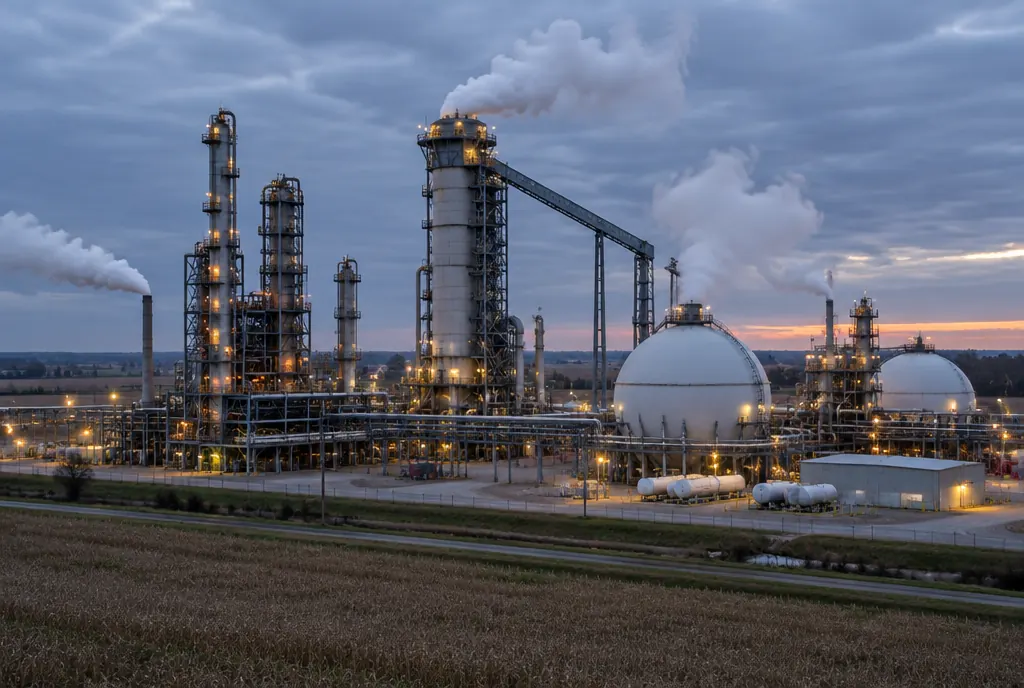
A crop duster plane at work in the Imperial Valley, California, photographed by Charles O'Rear for the EPA's Documerica project in May 1972. Photo: Charles O'Rear, U.S. EPA Documerica / National Archives · Public domain (U.S. government work) · sourceCrop dusting: an agricultural plane flies low over a rice field in Glenn County, California, spraying fertilizer, June 1, 2024. Photo: Frank Schulenburg · CC BY-SA 4.0 · sourceCenter pivot irrigation seen from the air, photographed by John A. Kelley of USDA NRCS (2009). Photo: John A. Kelley, USDA Natural Resources Conservation Service · Public domain (U.S. government work) · sourceAI-generated Illustration of a fertilizer plant at dusk: steel towers, storage domes and steam rising next to farm fields. AI-generated illustration (made with Higgsfield, GPT Image model), not a photograph of a real place. About our AI images
Lake Erie algae bloom: a harmful algal bloom in the western basin, photographed from the air on July 9, 2018 (NOAA GLERL). Photo: NOAA Great Lakes Environmental Research Laboratory (photo: Zachary Haslick, Aerial Associates Photography) · Public domain (U.S. government work) · sourceLake Erie algae bloom at Kelleys Island, Ohio, photographed by T. Joyce of NOAA GLERL in 2011. Photo: T. Joyce, NOAA Great Lakes Environmental Research Laboratory · Public domain (U.S. government work) · source
What you can do with this
The point isn’t despair. It’s knowing what you’re buying. Every step away from this system counts, whether that’s buying a share of beef from a farm, choosing eggs by what the label actually means, rendering your own tallow or baking your own bread. You don’t have to do all of it to make a difference. Pick one.
All photos are listed with their authors and licenses, and the AI illustrations with how they were made, on our photo credits page.
Questions people ask
Are these photos real?
Almost all of them. Every image is a real photograph from Wikimedia Commons, either public domain (many are from USDA, EPA or NOAA) or under a Creative Commons license, except six labelled AI-generated. Those show places that don't allow cameras: a french-fry line, a nugget line, a deboning line, a fast-food fryer bank, the inside of a hog barn and a fertilizer plant. They're marked “AI-generated” on the image, in the caption and in the file's metadata.
Why are some photos old?
A few come from the EPA's Documerica project in the 1970s and a 1940s newspaper archive, because they are among the few freely licensed images of those places. Captions give the year so you can judge them in context.
Does every farm look like this?
No. These photos show the large, consolidated end of the system, which supplies most supermarket food. Many farms sell direct and raise animals very differently, which is why our guides cover how to find them and what to ask.
Can I share these photos?
Yes, under each photo's own license. Credit the photographer as shown and link the license. Public-domain images have no conditions. The full list is on our photo credits page.
A fair, evidence-first guide to seed oils: the list, how they are processed, the case against them, what trials and studies show, and practical cooking choices.